A scientific publication by REDYSIGN researchers explores how wood-derived fibres and lignin-based materials can be combined to develop functional absorbent pads without conventional plastic components
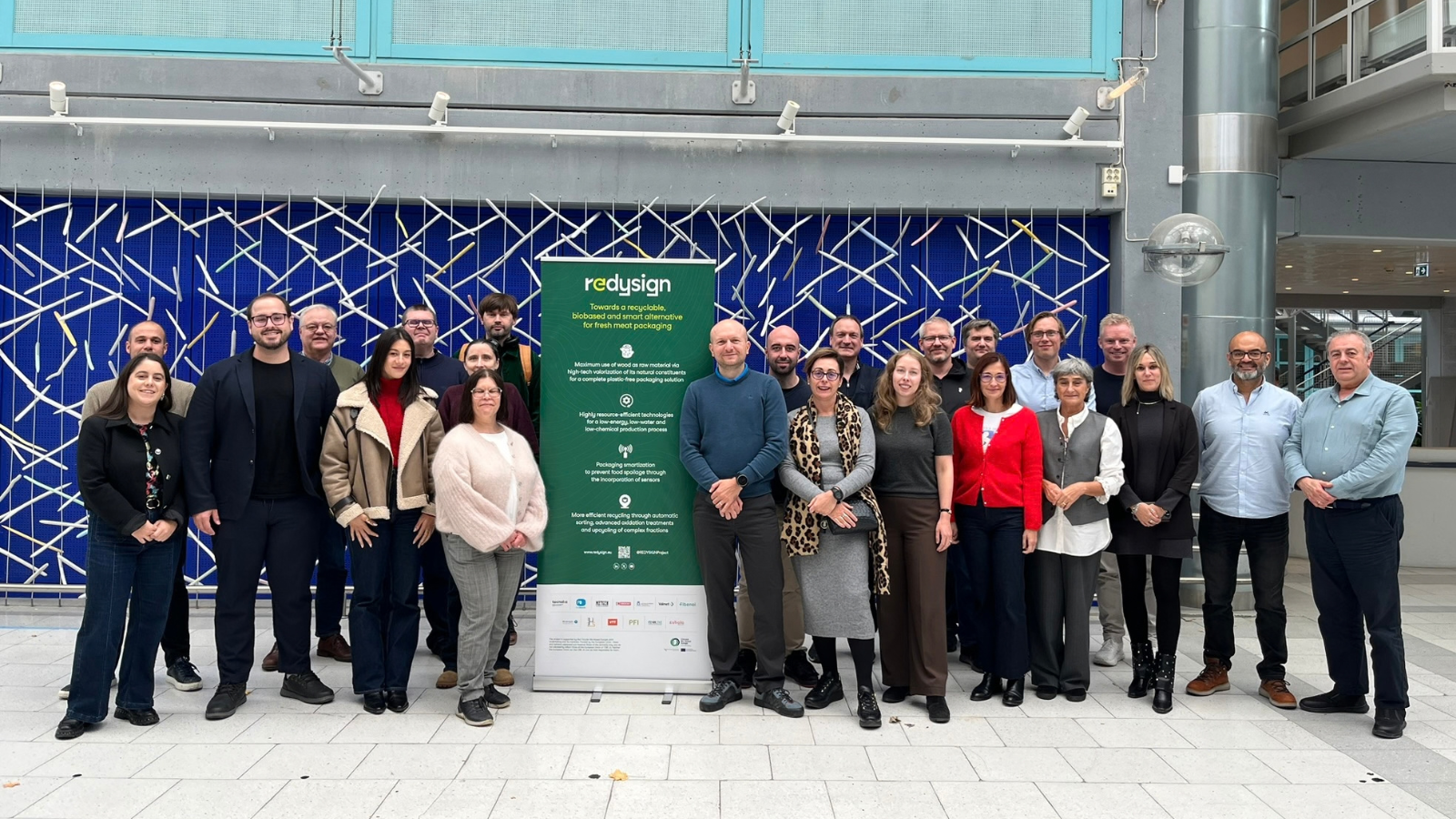
A new scientific publication developed within the framework of the REDYSIGN project presents progress towards more sustainable absorbent pads for fresh meat packaging.
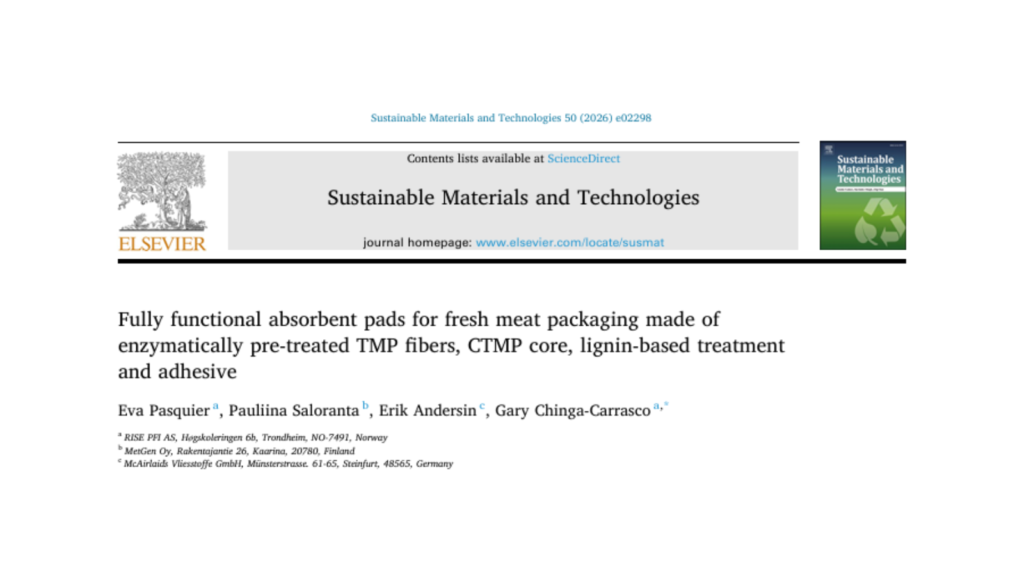
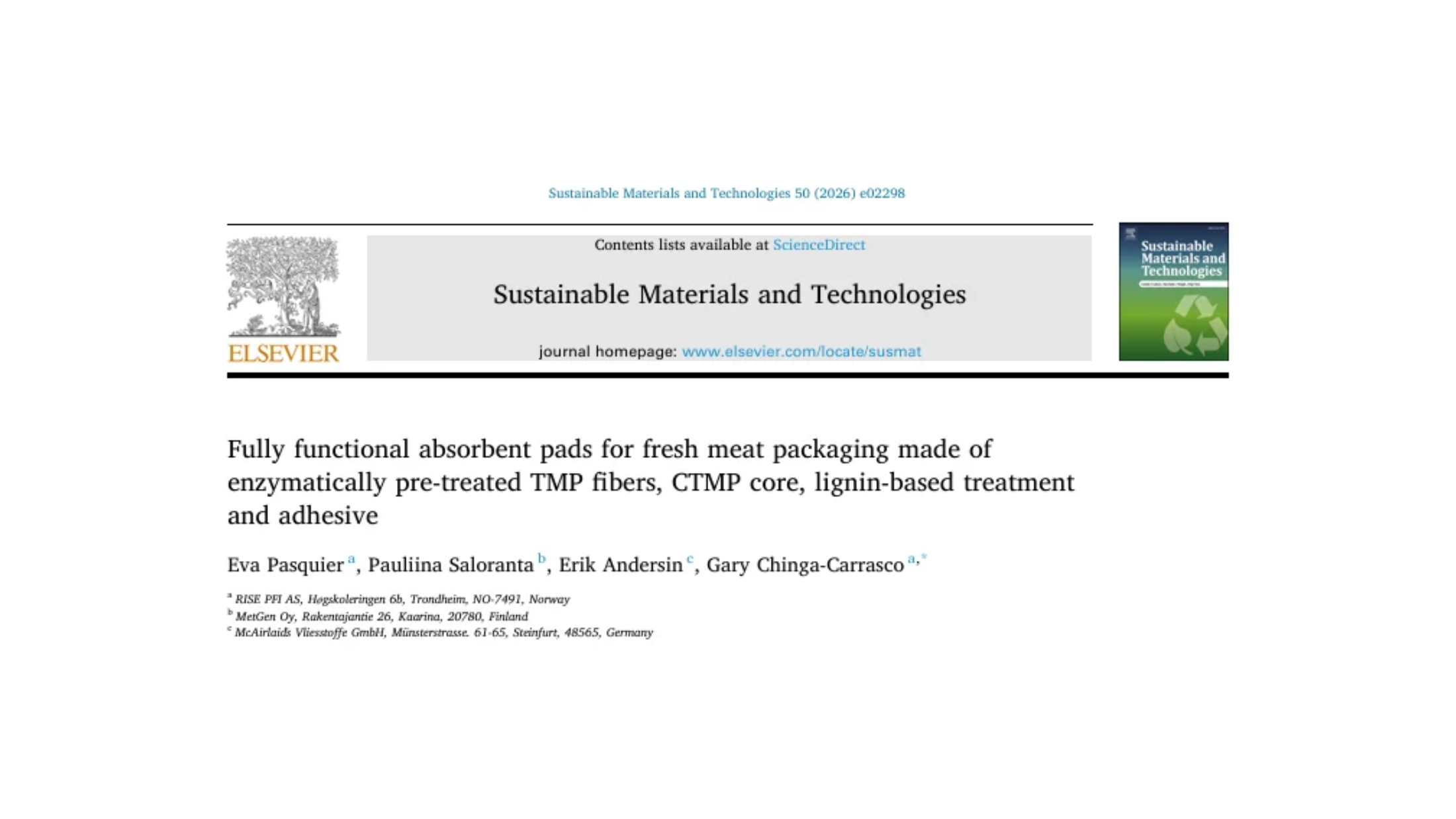
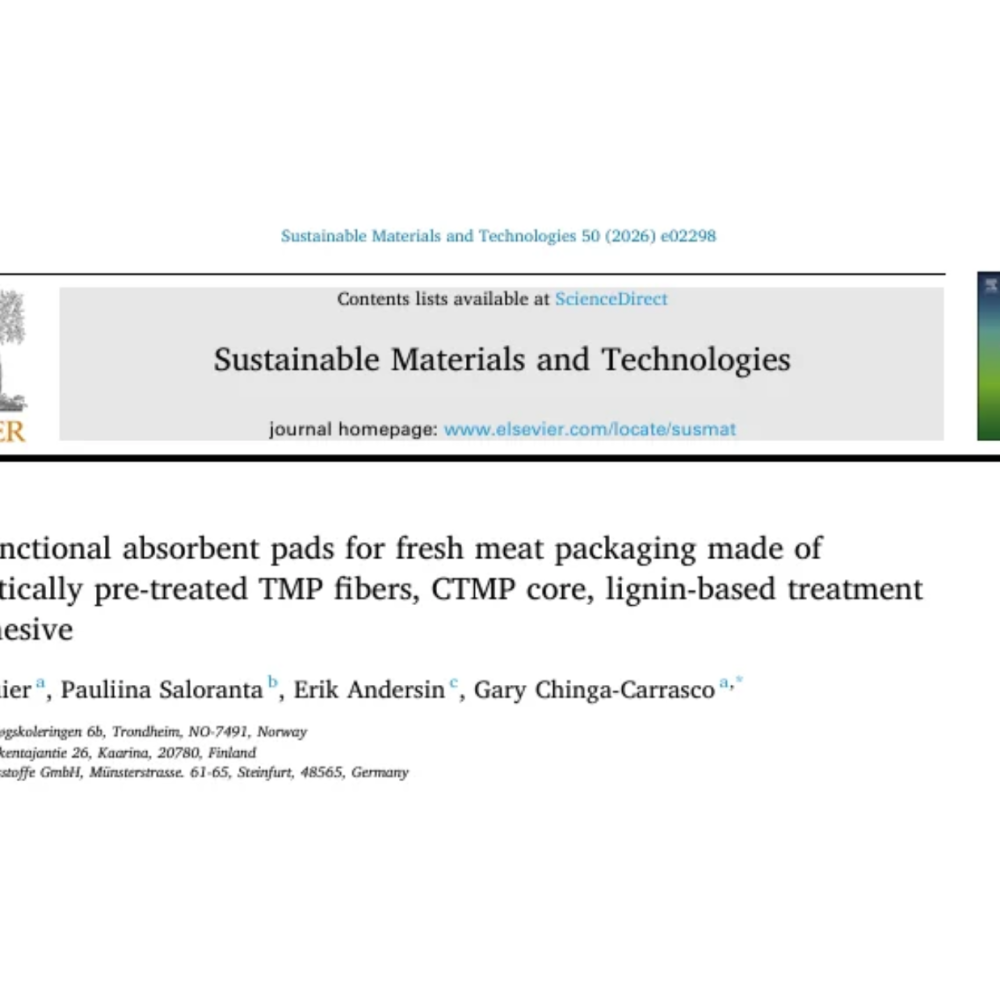
The study, entitled “Fully functional absorbent pads for fresh meat packaging made of enzymatically pre-treated TMP fibers, CTMP core, lignin-based treatment and adhesive”, was published in the journal Sustainable Materials and Technologies. Authored by Eva Pasquier, Pauliina Saloranta, Erik Andersin and Gary Chinga-Carrasco, the research explores the development of absorbent pads made entirely from wood-derived materials.
Absorbent pads play an essential role in fresh meat packaging. They capture liquids released during storage and help maintain product quality. However, conventional solutions often contain plastic films and other synthetic components. Replacing these materials represents an important challenge for more circular packaging systems.
Combining wood-based materials for functional performance
The research investigates how different lignocellulosic materials can be combined to reproduce the essential functions of conventional absorbent pads while eliminating the need for plastic components.
Their solution combines a core made from chemi-thermomechanical pulp (CTMP) with films produced from fibrillated thermomechanical pulp (TMP) fibres. The researchers also incorporated lignin-based treatments and a wood-derived adhesive to seal the films around the absorbent core.
This approach combines several material innovations in a single wood-based product. It also demonstrates the potential of lignocellulose as an alternative to conventional multi-material packaging components.
Towards recyclable-by-design fresh meat packaging
The publication represents an important contribution to REDYSIGN’s development of smart fibre-based packaging. These innovative solutions seek to replace conventional fossil-based materials.
In May 2026, REDYSIGN also tested the absorbent pads during its first packaging trials with fresh chicken. The trials showed comparable performance to the commercial reference, providing encouraging evidence of their potential for real food packaging applications.
Together, these developments contribute to REDYSIGN’s efforts to combine material innovation, functionality and circular design. They also support the transition towards more sustainable packaging solutions for fresh meat.