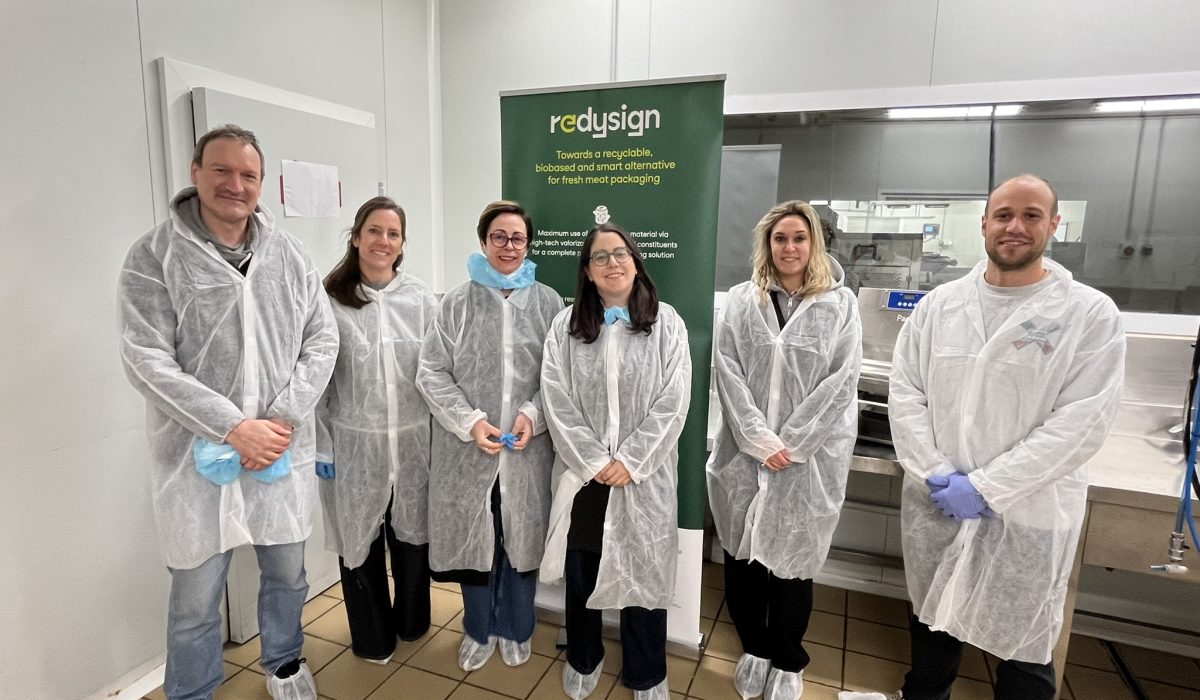
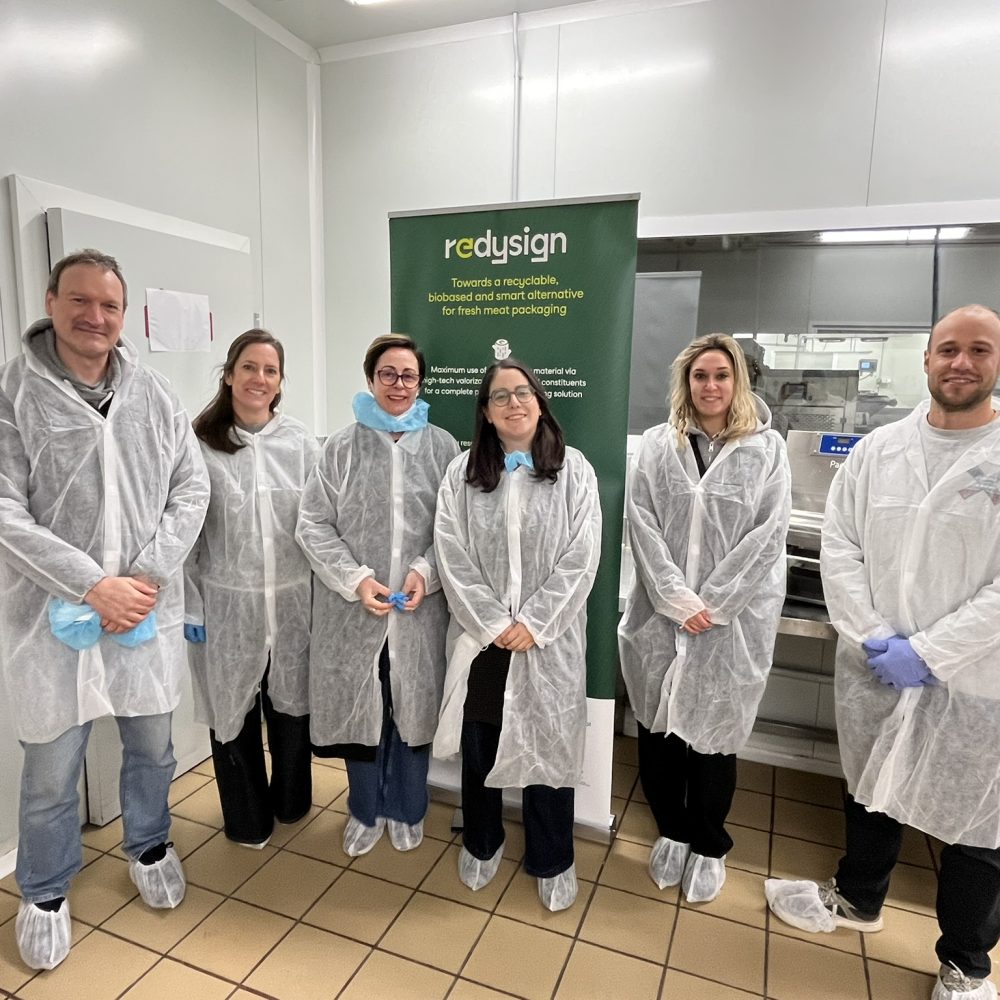
Partners from EROSKI, TECNALIA, PACKBENEFIT and ZABALA INNOVATION gathered at MAGUI Central Kitchen facilities, where a total of 96 packaging samples combining REDYSIGN developments and commercial reference materials were produced.
The REDYSIGN project has completed its first validation trials of prototype packaging solutions for fresh chicken. The trials mark an important milestone for the project, moving REDYSIGN developments from laboratory research towards operational evaluation and bringing the consortium one step closer to delivering fully bio-based, recyclable and smart packaging solutions for the food sector.
The activities took place on 12 May 2026 at the MAGUI Central Kitchen facilities in Vitoria-Gasteiz, Spain, bringing together project coordinator Álvaro Tejado and Jaime García (TECNALIA), Ainara Llona and Amaia Uriarte (EROSKI), Rebeca Valladares (PACKBENEFIT) and Ana Báscones (ZABALA INNOVATION).
Coordinated by EROSKI, the trials focus on evaluating food safety and shelf life through the monitoring of microbial development and the analysis of potential sensory differences compared to conventional plastic-based solutions currently used in the market.
How the REDYSIGN packaging trials were carried out
The demonstration reproduced the complete operational and distribution workflow, covering packaging preparation, modified atmosphere packaging (MAP), labelling, traceability management and refrigerated transport of samples for laboratory analysis.
The first phase involved configuring the packaging equipment provided by PACKBENEFIT, including the connection to electrical and gas supply systems for modified atmosphere conditions using a mixture of 30% CO₂ and 70% N₂. Operational settings such as pressure, vacuum and sealing parameters were verified before production started.
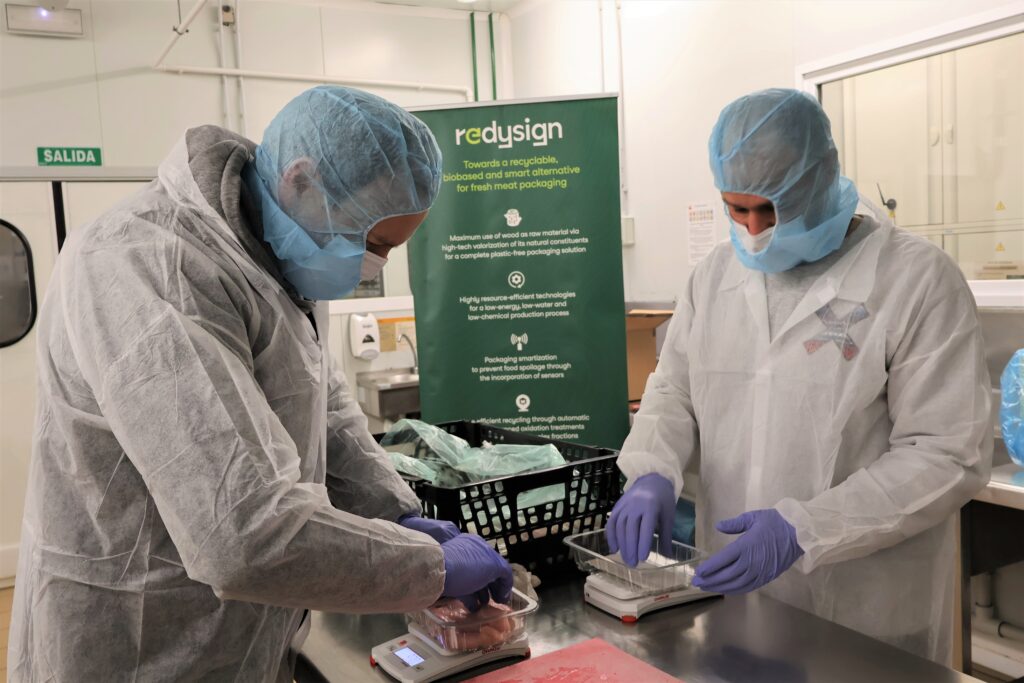
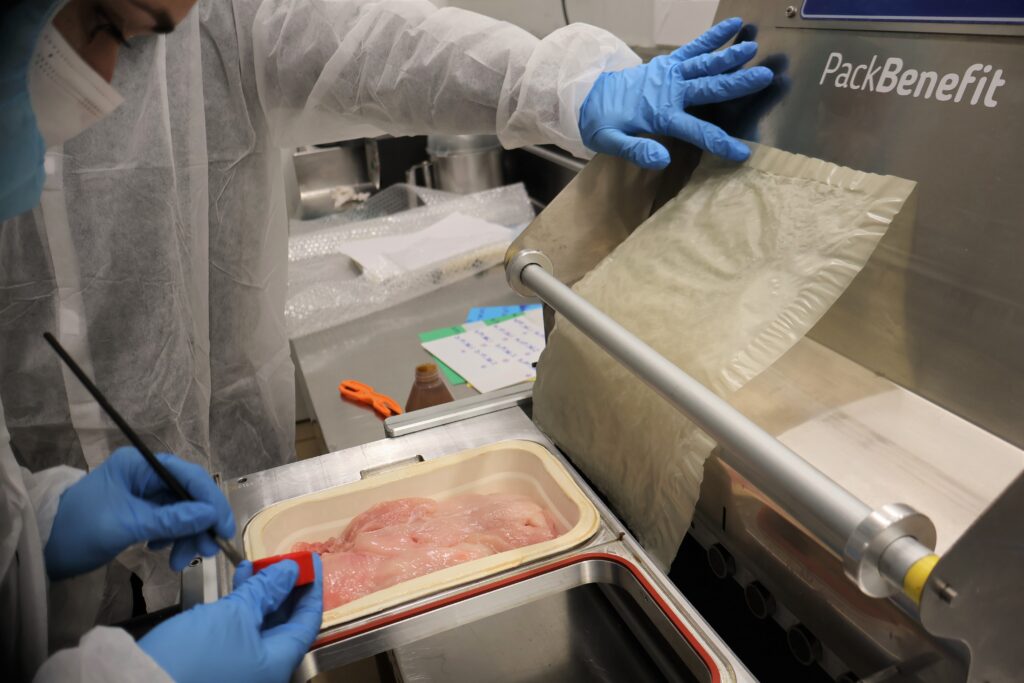
Following the reception of raw materials and packaging components, including chicken breast, trays, absorbent pads, films, sealing adhesive, sensors and labelling materials, the preparation stage was carried out. Chicken portions were standardised to approximately 500 grams per tray before assembling the tray, absorbent pad and product configuration and integrating the spoilage sensors into the packaging systems.
The packaging process included tray sealing under MAP conditions, visual inspection of seal integrity, machine parameter registration and incident monitoring. Afterwards, all samples were labelled and coded for full traceability and registered in dedicated control sheets. Finally, the packaged samples were organised according to the predefined sampling schedule, packed into refrigerated transport boxes and delivered under controlled refrigerated conditions to Araba Laboratories in Vitoria-Gasteiz, Spain, for further analysis.
Evaluating REDYSIGN packaging prototypes and smart packaging components
During the trial, 96 packaging samples were produced combining different REDYSIGN prototype configurations and commercial reference materials.
The validation process included 46 wet- and dry-thermoformed fibre trays developed within the REDYSIGN project, some integrating an identification marker, together with 50 commercial PET trays used as reference materials. Different absorbent pad configurations were also assessed, including 100% wood fibre-based recyclable absorbent pads developed within the project and commercial pads for comparison.
The trials further evaluated REDYSIGN lidding films based on lignocellulosic micro- and nanofibres (LCMNF), alongside conventional PET/PE films. In addition, food spoilage sensors developed within the project were integrated into 10 trays, including 6 wet-thermoformed trays and 4 commercial tray configurations. Bio-based tray-film sealing adhesives for thermo-sealing applications were also used during the packaging process.
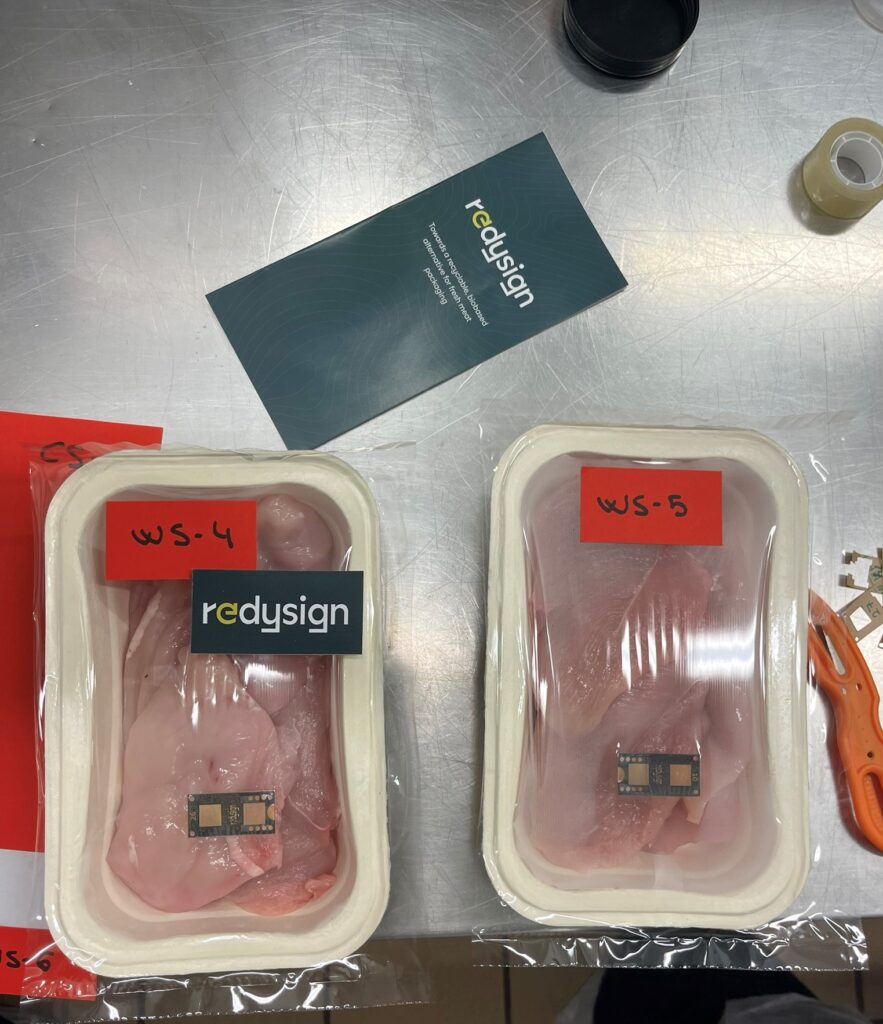
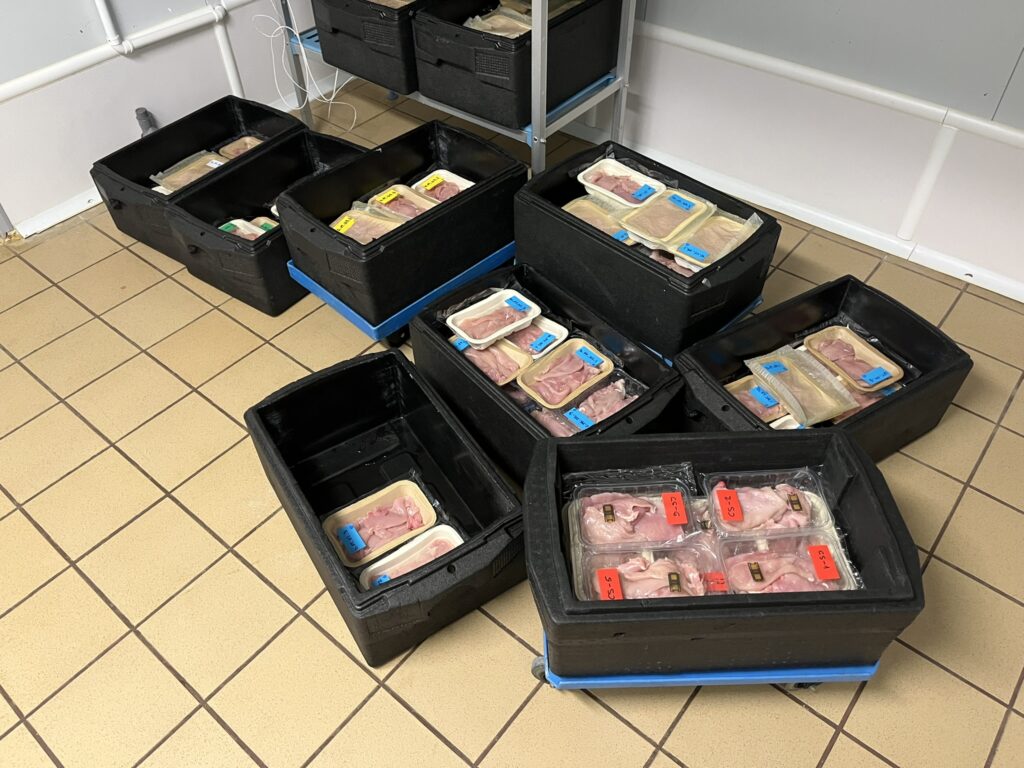
Laboratory evaluation is carried out across different sampling stages during the 13-day refrigerated storage period, with analyses performed on days 0, 2, 3, 6, 9 and 13 after packaging. Key parameters related to shelf life, microbiological behaviour and sensor performance are assessed, including aerobic and anaerobic microorganisms, enterobacteria, lactic acid bacteria, colour and acidity indicators, as well as gas composition analysis.
Sensory characteristics such as odour, colour, texture and brightness are also being assessed together with exudate generation, microbial activity in the absorbent pads and changes in pad weight during storage. In parallel, exudate generation inside the trays, microbial activity in the absorbent pads, pad weight evolution and the response of the food spoilage sensors are monitored throughout the storage period.
Towards sustainable and recyclable food packaging solutions
Validation activities play a central role within REDYSIGN, allowing partners to evaluate the behaviour of the project packaging solutions against conventional commercial references during packaging, storage and shelf-life conditions.
The results and knowledge obtained during this first real-condition trial will thus support the optimisation of REDYSIGN technologies and contribute to the next development stages towards fully recyclable, bio-based and smart packaging solutions for fresh food applications.
Through these activities, REDYSIGN continues advancing its objective of developing sustainable food packaging systems capable of reducing plastic waste and supporting the transition towards a more circular packaging industry.