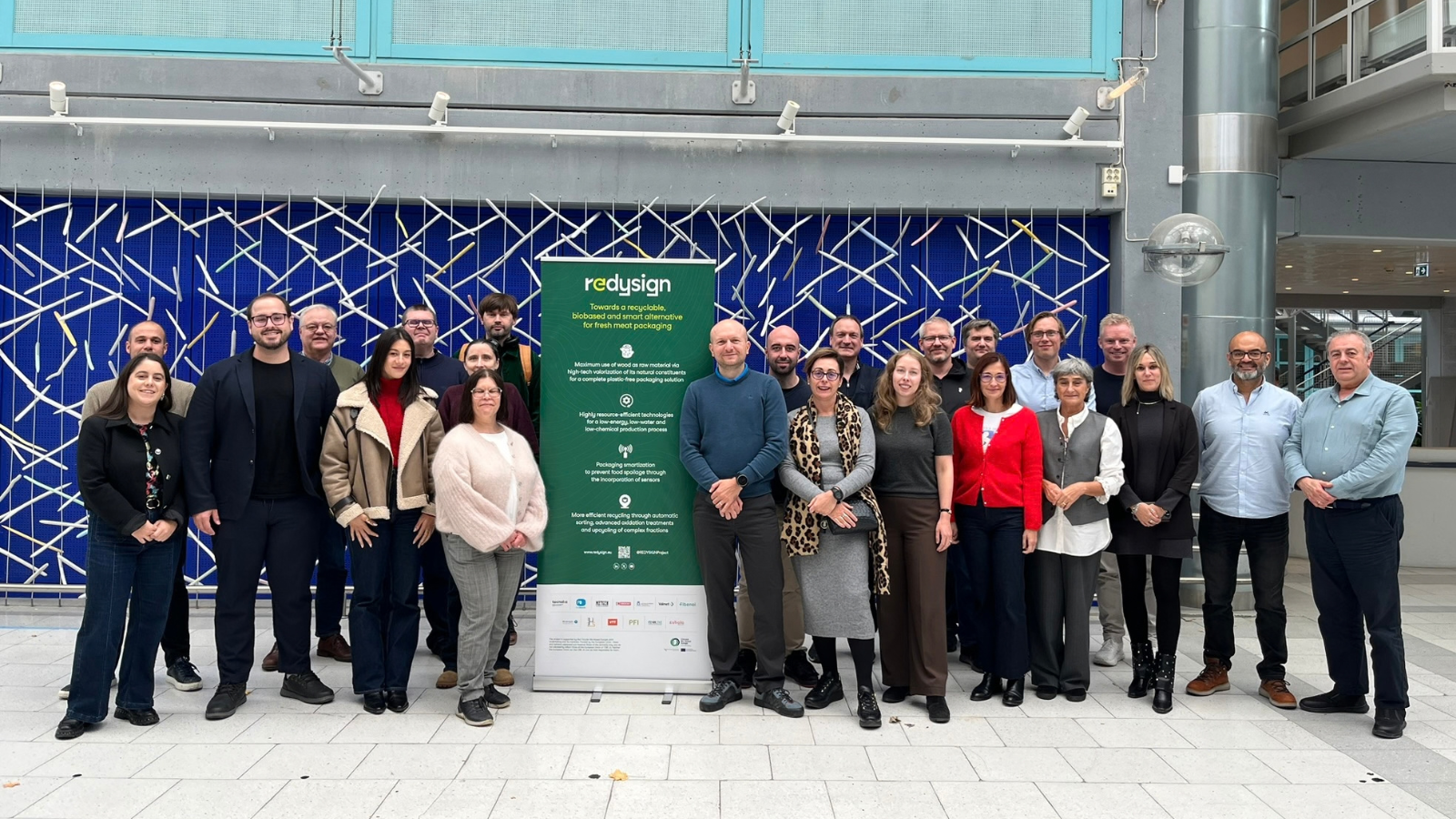
Following the first trials of its fibre-based packaging solutions for fresh chicken, REDYSIGN partners gathered in Trondheim to review the results, share technical progress and set priorities for further testing in 2027.
The REDYSIGN project continues to advance the development of innovative fibre-based packaging solutions for fresh meat. The first trials, conducted in May 2026, provided valuable information on the performance of the developed components under realistic packaging and refrigerated storage conditions, highlighting promising results and identifying areas for further improvement.
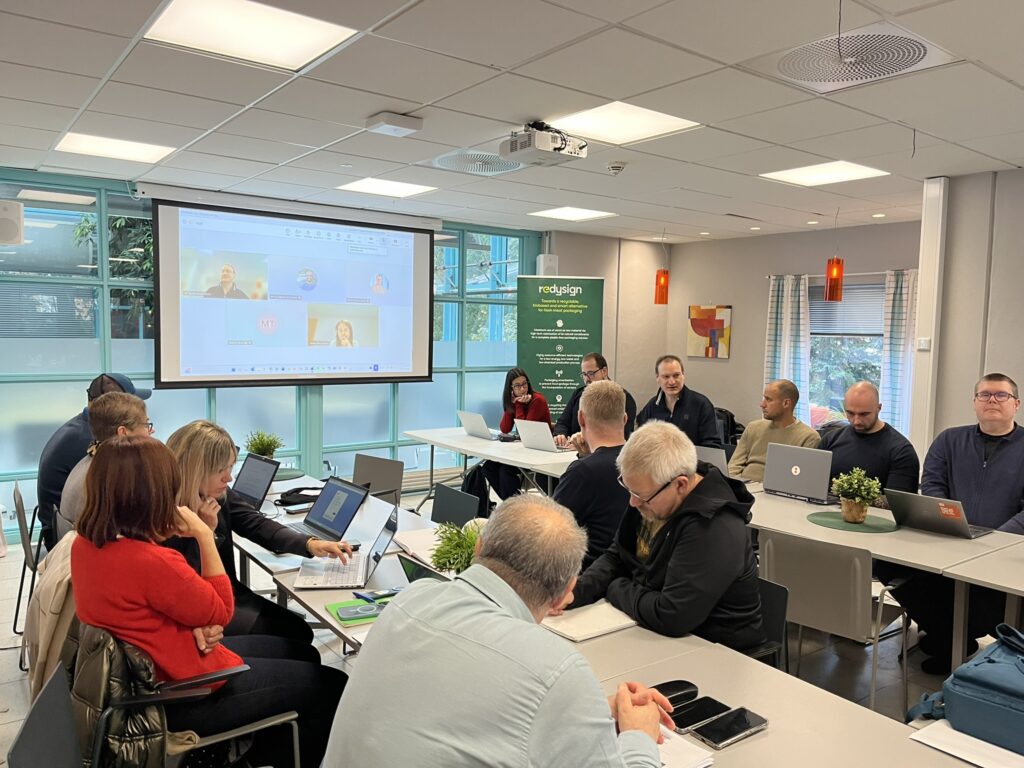
The results were a central focus of the REDYSIGN Consortium Meeting, held on 7–8 October 2026 in Trondheim, Norway. Hosted by RISE PFI, the two-day gathering brought together project partners at their facilities to review the latest technical achievements, address remaining challenges and define priorities for the final phase of development.
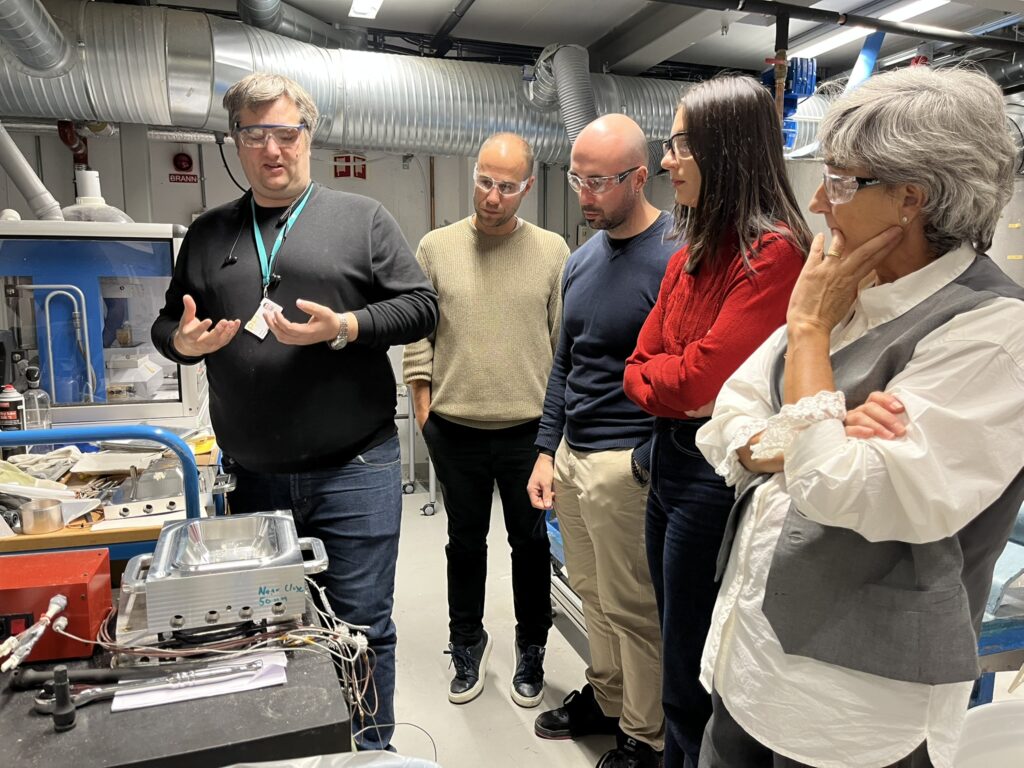
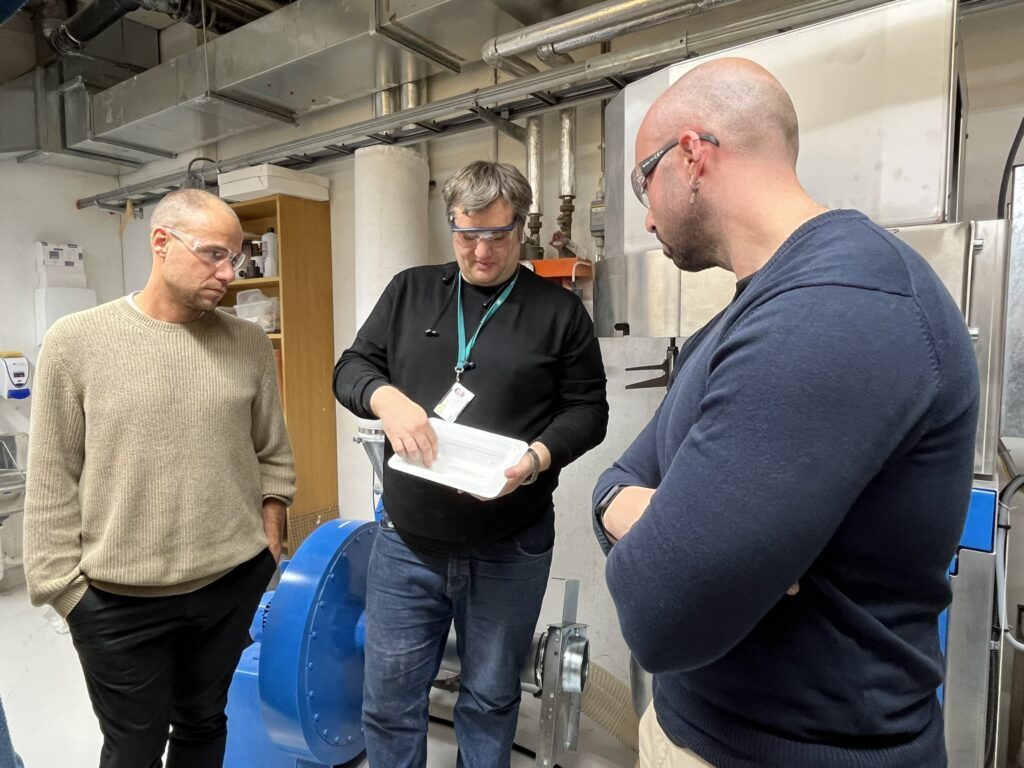
The meeting included a guided visit to RISE PFI’s laboratories. With over a century of experience in biorefinery research, the institute specialises in lignocellulosic materials and processes, with expertise spanning fibre technology, fibre-based products, bioenergy, biopolymers and biocomposites. During the visit, researchers introduced partners to some of the technologies and equipment supporting the project’s developments.
First packaging trials: Key findings and lessons learned
The main highlight of the gathering was the review of the results from the first packaging trials with fresh chicken, carried out in May 2026 in Vitoria-Gasteiz, Spain.
The trials brought together different REDYSIGN packaging components, including fibre-based trays, absorbent pads, lidding films and smart sensors, to evaluate their performance under refrigerated conditions compared with conventional plastic-based packaging.
The results provided valuable insights into both the potential of the developed solutions and the areas requiring further improvement. Barrier performance and modified atmosphere retention are key priorities for improving food preservation. The tests highlighted the need to enhance the moisture resistance and structural robustness of the fibre-based trays.
At the same time, REDYSIGN’s absorbent pads showed comparable performance to the commercial reference, while the smart sensors demonstrated promising preliminary results, providing a visible indication of product deterioration as storage progressed. These findings provide a valuable basis for the next development stages and the preparation of further testing.
Further progress in fibre-based packaging components
Alongside the findings from the first trials, consortium partners presented the latest developments in REDYSIGN’s packaging components.
Work on fibre-based trays and bio-based barrier coatings has continued, with PACKBENEFIT advancing the development of plastic-free thermoformed trays. TECNALIA has evaluated advanced oxidation as a promising solution for improving the recycling of food-contaminated trays. The results demonstrated encouraging potential, supporting both more efficient recycling processes and enhanced hygiene performance, while enabling the recovered material to be further valorized in new packaging applications. Based on those recycled fibres, RISE PFI has continued its work on the development and optimisation of trays and absorbent pads. Efforts have focused on upgrading recycled fibres to increase their suitability for wet-moulded tray production. Furthermore, fines, an underutilised side stream from industrial absorbent pad production, have been also investigated as a raw material for films, with the aim of replacing conventional plastic films currently used in absorbent pads.
In the area of nanocellulose-based lidding films, VTT has evaluated different formulations at pilot scale, identifying a promising combination with favourable barrier properties. VTT has also advanced the integration of food spoilage sensors into the films, allowing their colour response to be observed through the packaging.
Beyond the technical developments, REDYSIGN has advanced its sustainability assessments. HOLOSS has updated and finalised process flow models for products undergoing initial trials, laying the groundwork for life cycle inventory data collection to support environmental and economic evaluations. Relevant social impact categories have also been identified to support the upcoming Social Life Cycle Assessment.
Preparing for the next packaging trials in 2027
The challenge now lies in translating the advances achieved in individual packaging components into a more effective and integrated solution.
The first trials have established a realistic performance baseline for REDYSIGN’s packaging solutions, providing valuable guidance for the next development stages. Efforts will focus on improving the complete tray–film system, particularly its barrier performance, modified atmosphere retention and moisture resistance, while building on the promising results achieved for absorbent pads and smart sensors.
These improvements will guide the preparation of the next packaging trials planned for May 2027, alongside continued work on recycling and sustainability as REDYSIGN moves towards its final results.
Watch the first packaging trials in just two minutes! ▶️