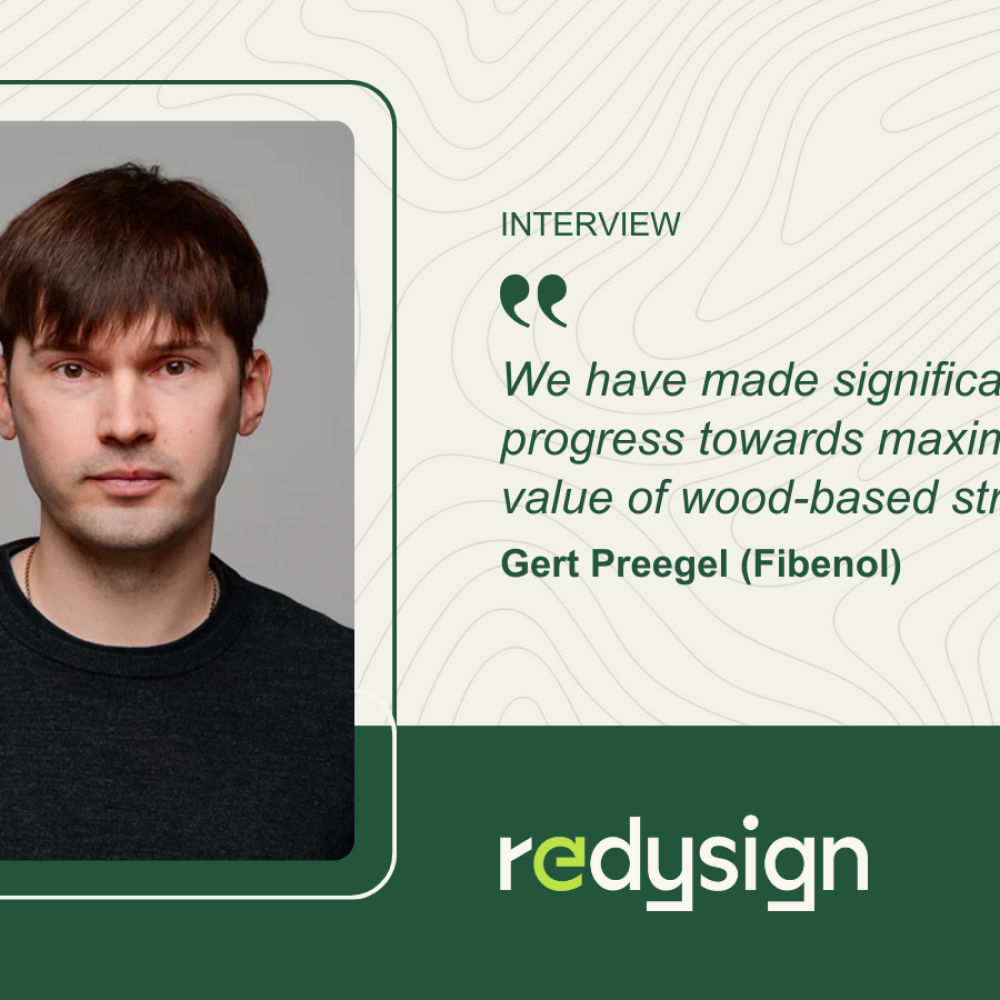
A conversation with Gert Preegel on the technical advances underpinning REDYSIGN’s recyclable smart packaging.
As REDYSIGN advances in its mission to develop smart, fibre-based and recyclable-by-design packaging for fresh meat, one of its major development phases has recently been completed. This phase focused on establishing resource-efficient processes to obtain key wood-based material streams, such as fibres, lignin and sugars, that will form the basis of the project’s future packaging components.
With the successful completion of the planned milestone on fibre development, the project is now advancing into a new stage focused on integrating and validating the wood-based material streams essential for REDYSIGN’s packaging concept. This transition marks a significant step forward, setting the foundation for upcoming activities in formulation, prototyping and performance demonstration.
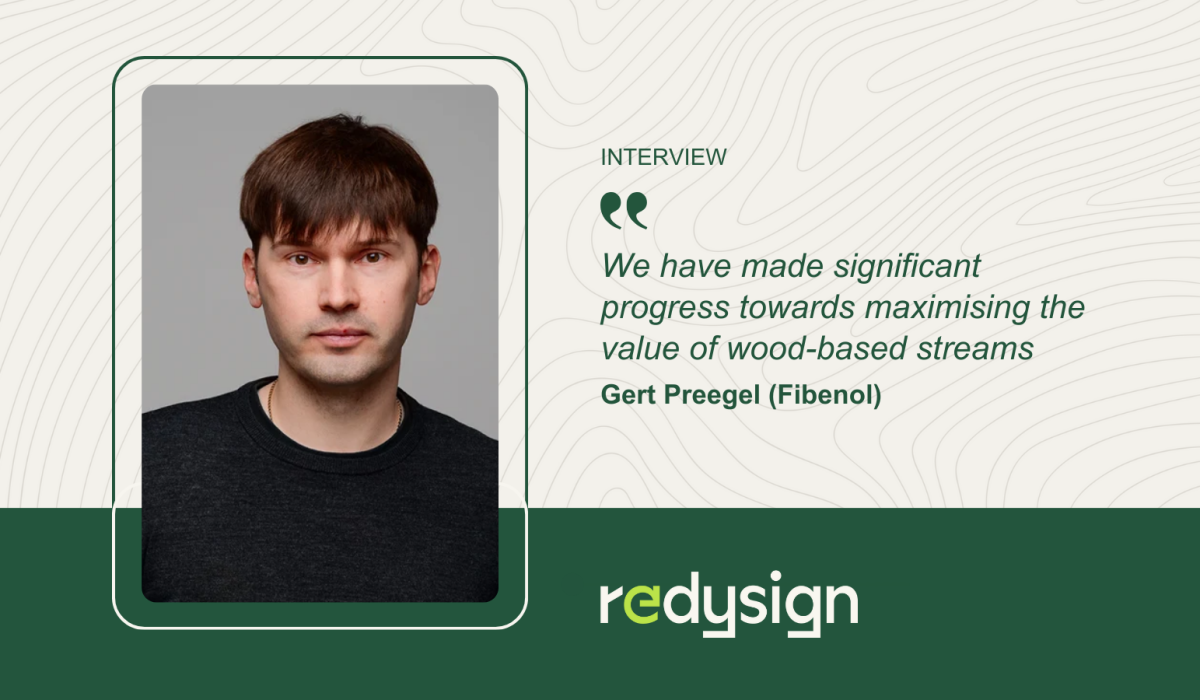
To explore the progress achieved so far, we spoke with Gert Preegel, PhD, MCC Innovation and Development Manager at Fibenol and leader of Work Package 2, who shares insights into the challenges addressed during this phase, the technical advancements made and what these developments mean for the next stages of the project.
What challenges have been encountered during this development phase?
Over the past two years, we addressed several challenges associated with optimising and scaling up the wood-based material streams essential to the project.
First, the optimization of enzymatic pretreatments for softwood fibres required multiple iterations, as the compatibility between fibre characteristics, enzyme dosage, and refining conditions proved more complex than initially anticipated. In this same line, we also faced challenges in transferring laboratory results to pilot-scale operations. Scale-up introduced variability that required additional troubleshooting, particularly concerning process stability and consistency of material quality.
The production of low-energy but good-quality lignocellulosic micronanofibers (LCMNF) was also highly challenging, as they are to be used in high-demanding parts of the packaging product. That challenge kept some people up at night these past few months, but it all ended on a high note.
Finally, the fractionation of hardwood using Sunburst™ technology demanded fine-tuning of operating parameters to achieve the targeted purity and yield levels for MCC, lignin, and sugars. Coordinating material flows between partners was equally important to maintain progress across the different development lines.

What key results have been achieved so far, and how do they contribute to REDYSIGN’s overall objectives?
Overall, significant progress has been made toward achieving the objectives defined at the beginning of the project.
A major accomplishment is the reduction of energy consumption in TMP production and the reduction of chemicals in functional TMP and LCMNF production. High-solids enzymatic and chemical pretreatments have enabled a meaningful decrease in refining energy while preserving fibre quality, contributing to more resource-efficient processes and reducing the environmental footprint associated with fibre and LCMNF production.
Another significant outcome is the high-yield fractionation of hardwood biomass into MCC, lignin and sugars. The MCC fraction meets the specifications required for downstream applications such as films and coatings, lignin refined through METNIN™ technology is suitable for METNIN-SHIELD™ formulations, and the sugar streams are fully compatible with the sealant production workflow. This demonstrates the feasibility of an integrated, multi-product valorisation pathway in which all components of the feedstock contribute value.
The project has also delivered functional fibre prototypes. Both chemically and enzymatically modified TMP fibres have been produced and evaluated. These fibres exhibit enhanced functional properties that align with the targeted improvements in performance for potential end-use applications.
Together, these achievements demonstrate that REDYSIGN is progressing strongly towards its central objective: maximising the value extracted from softwood and hardwood biomass streams within a comprehensive, high-value biorefinery concept that underpins the recyclable-by-design packaging system.
What is your personal perspective on the work carried out so far, and how do you view the next steps?
Overall, the work carried out within this Work Package has been technically robust and strategically aligned with the project’s value-creation objectives. Despite certain practical and scale-up related challenges, the team has demonstrated strong problem-solving capability and has delivered results that form a solid foundation for upcoming activities.
The next steps—particularly those involving the integration of these material streams into the formulation of the packaging components, product validation, and the scale-up of the most promising developments—appear highly promising. The quality of the intermediate products, together with the improved energy efficiency and functional fibre prototypes, suggests a high likelihood of success in the subsequent phases. Continued collaboration across partners and careful control of process parameters will be key to maximising the impact of the work done so far.