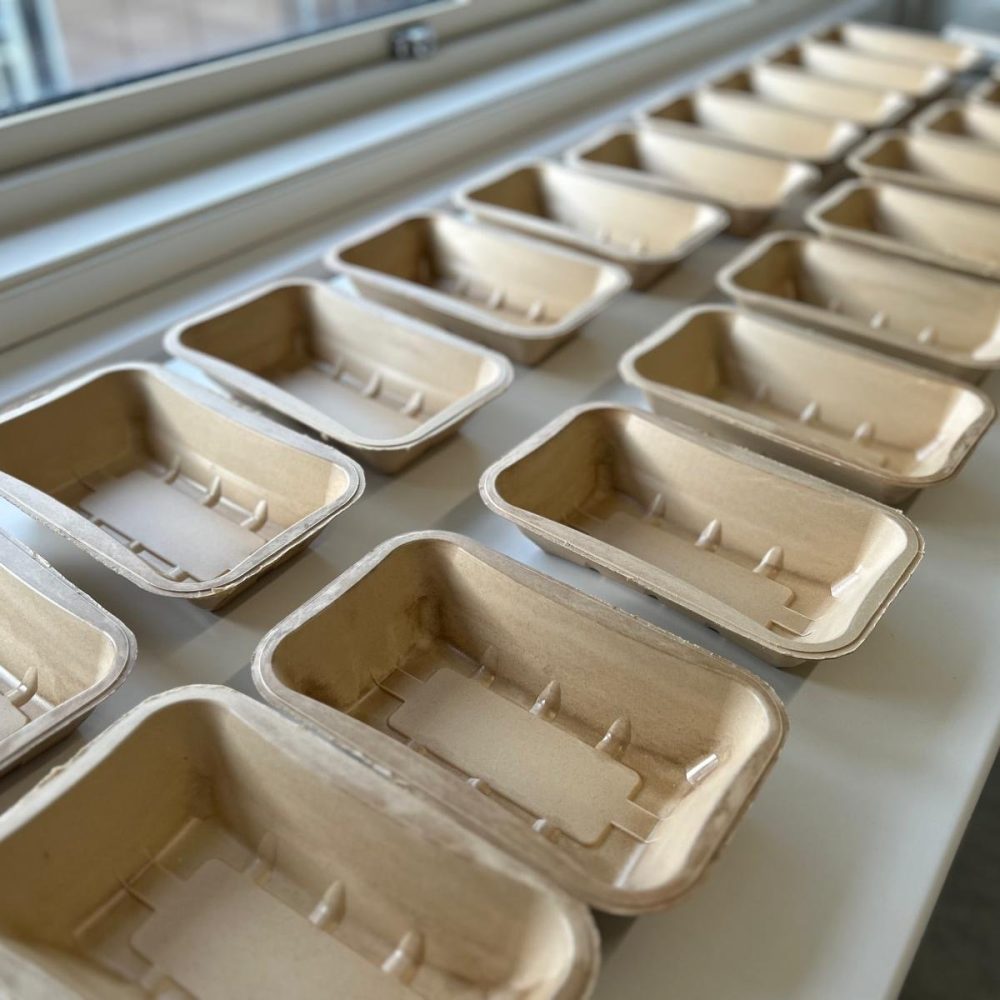
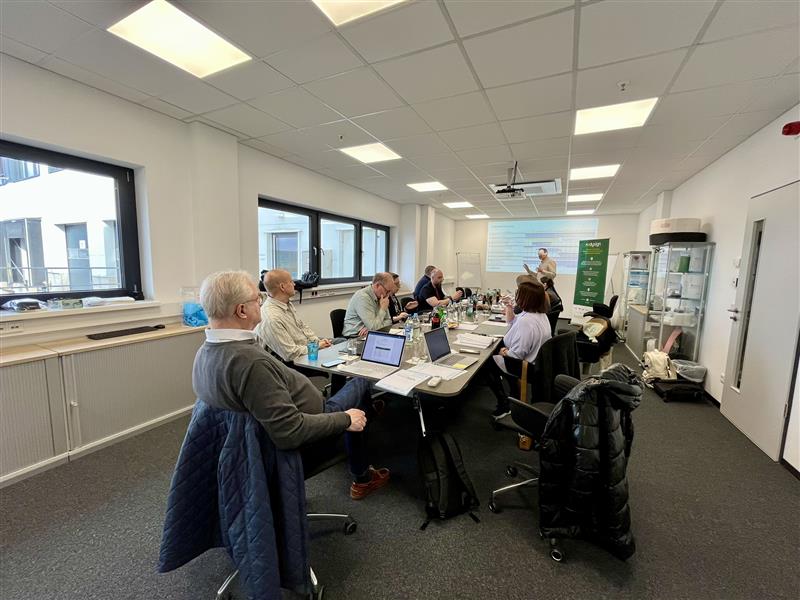
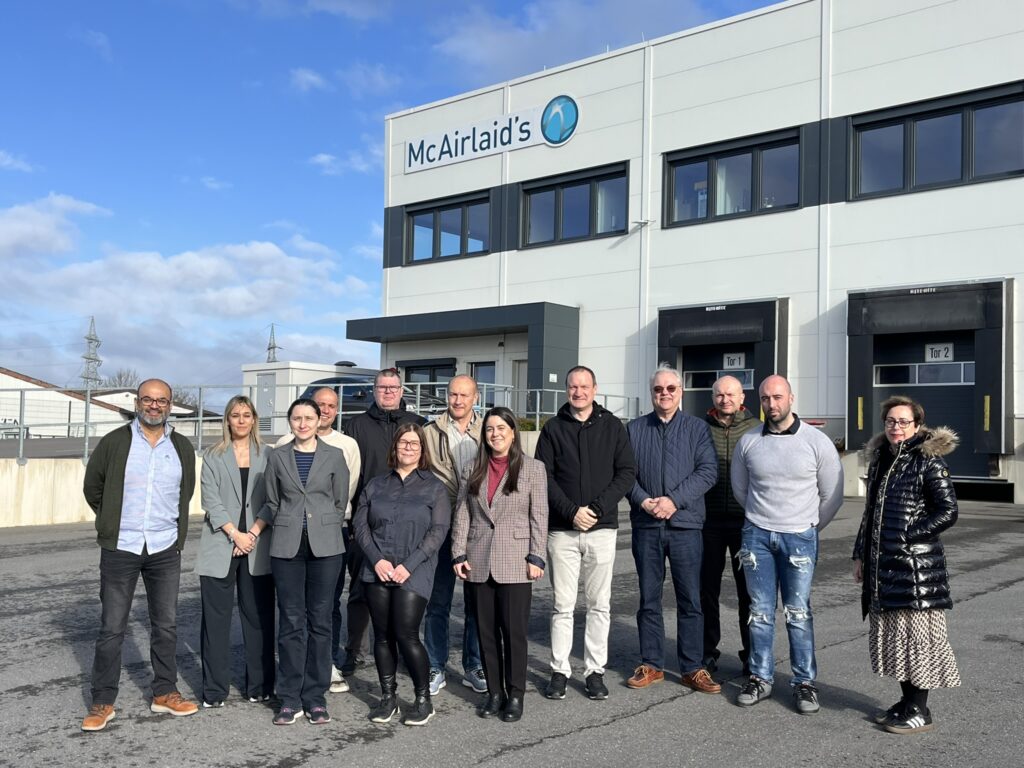
Consortium partners gathered at McAirlaid’s facilities in Selm to assess the developed prototypes, address key challenges in innovative processes, and align on the best path towards successful demonstration.
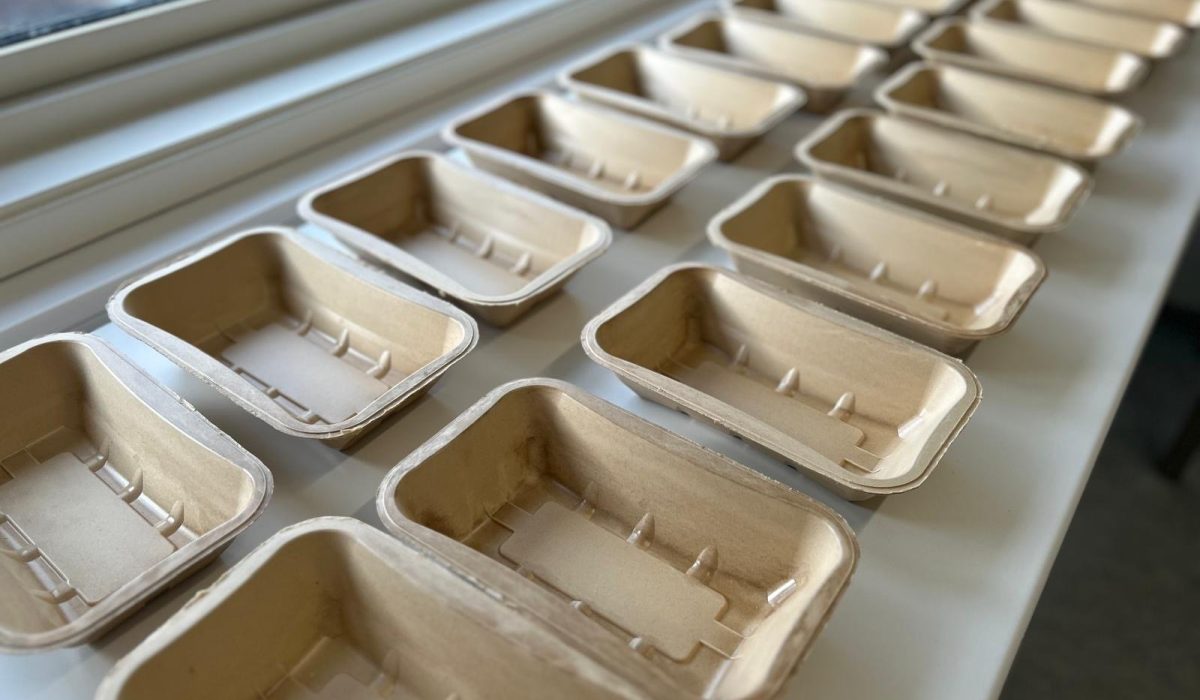
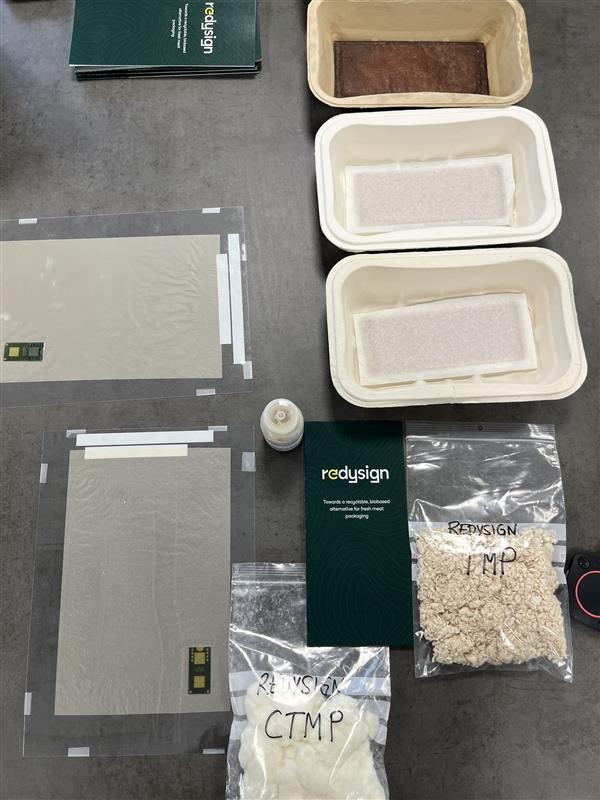
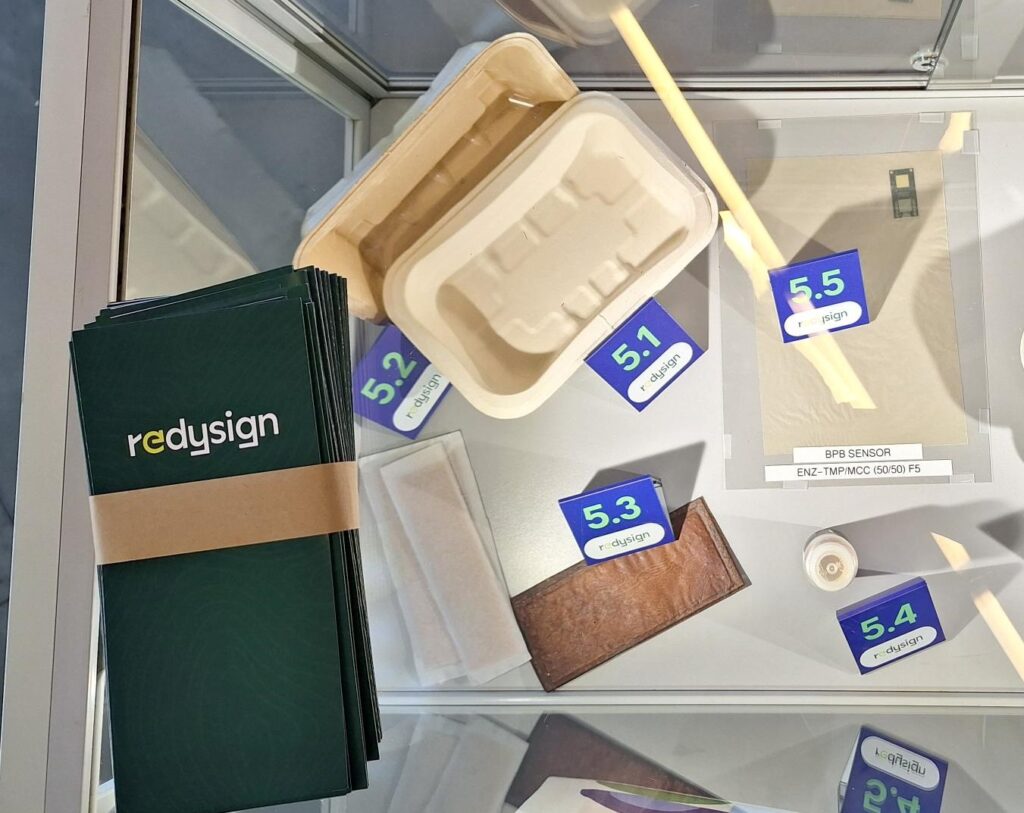
New milestones mark the REDYSIGN project’s progress towards fully recyclable, wood-based food packaging solutions. Recent achievements include the creation of several prototype components, such as fibre-based trays, plastic-free absorbent pads, wood-based lidding films and sugar-based adhesive solutions. These prototypes were showcased at the CBE JU Stakeholder Forum 2026, held on 24 March in Brussels, Belgium, and later presented to consortium partners during the Consortium Meeting of the project, which took place on 25–26 March in Selm, Germany.
Hosted by McAirlaid’s, the meeting provided a valuable opportunity to review technical progress, align on upcoming activities and define the next steps. The consortium is now moving towards integrating intermediate components into a full demonstrator, which will be validated under real conditions by EROSKI, marking a key milestone for the project.
KEY RESULTS GUIDING THE NEXT STEPS OF REDYSIGN
The REDYSIGN project is progressing according to plan, delivering promising results towards one of its key objectives at this stage: testing how the new recyclable-by-design packaging components perform against established requirements.
Developing a 100% wood-based food packaging system remains a highly ambitious challenge, requiring strong coordination and the effective use of each partner’s expertise. In this context, close collaboration among partners is essential.
During the gathering, several key achievements were highlighted. Among them, the food spoilage sensor has been successfully developed and validated under relevant conditions. In parallel, identification markers have been produced and integrated into trays and coatings, enabling their detection through Raman spectroscopy.
In the last six months, the project has also advanced in the development of several prototypes, including fully recyclable trays, through improvements in the dry thermoforming process using functional TMP fibres, 100% wood fibre-based, recyclable and binder-free absorbent pads, lidding films based on lignocellulosic micro-nanofibres (LCMNF) and microcrystalline cellulose (MCC), and bio-based adhesives for thermo sealing.
Additionally, progress has been made in in-line, real-time characterisation of fibre-based packaging (FBP) waste. The developed multi-sensor system has demonstrated excellent performance, accurately detecting contaminants such as blood and fats.
From a sustainability perspective, environmental and economic assessments are progressing as planned, with preliminary results already identifying key hotspots to guide further optimisation. These insights are supporting technical partners in refining the developed solutions. At the same time, the social life cycle assessment (s-LCA) has begun, analysing potential social impacts of REDYSIGN innovations. As an emerging technology, this assessment provides a forward-looking perspective, addressing how the technology could impact human capital and society if scaled up.
DRIVING PROGRESS THROUGH KEY BIO-BASED SECTOR EVENTS
A series of key events in March highlighted the strong progress achieved by the REDYSIGN consortium across the bio-based and packaging sectors.
The project coordinator, Álvaro Tejado from TECNALIA, first attended the final event of the SISTERS project in Brussels, creating a valuable opportunity to exchange knowledge and insights with experts from across the sector. This was followed by participation in the CBE JU Stakeholder Forum 2026, where REDYSIGN showcased its latest smart fibre-based packaging prototypes. These developments highlight the project’s progress in delivering recyclable-by-design solutions tailored to the fresh meat value chain.
The week concluded with the Consortium Meeting in Selm. Partners reviewed technical progress, addressed key challenges, aligned communication and exploitation strategies, and further strengthened collaboration. Participants also visited McAirlaid’s facilities, gaining first-hand insight into the industrial production of high-performance absorbent meat pads, characterised by their high absorption capacity and their role in extending shelf life by reducing microbial growth.
With one and a half years still ahead, the meeting concluded on a positive note. Álvaro Tejado highlighted the positive results achieved so far, particularly in overcoming initial challenges, and emphasised the promising path ahead as the project moves towards the initial testing of its packaging solutions.