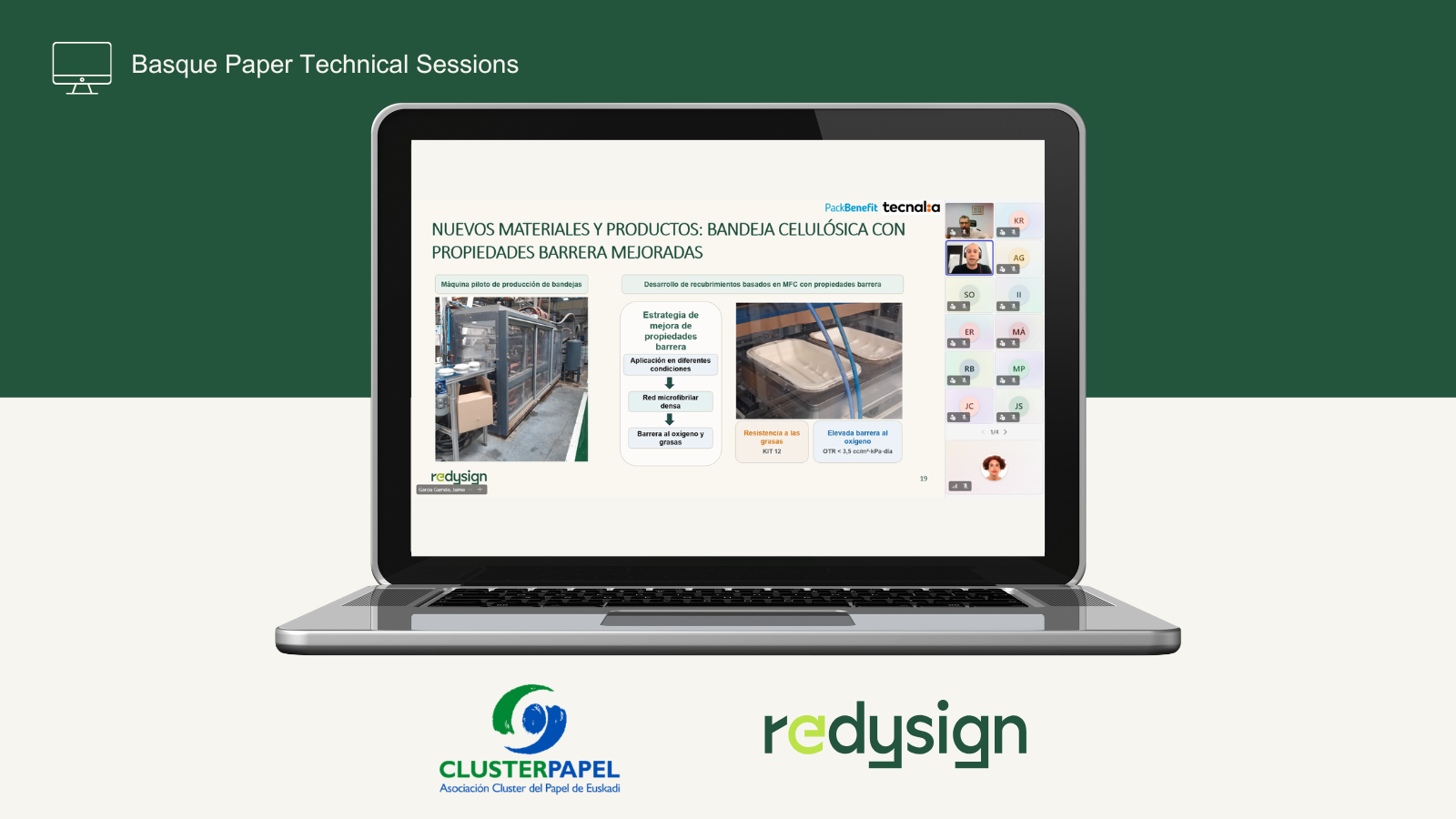
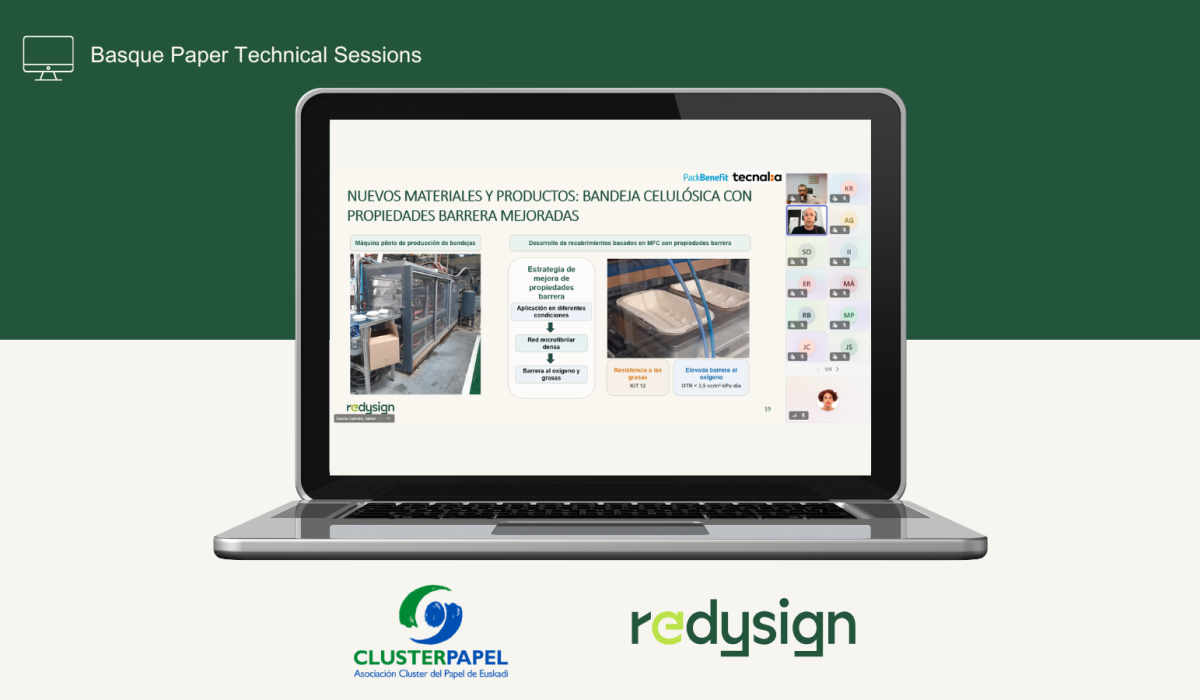
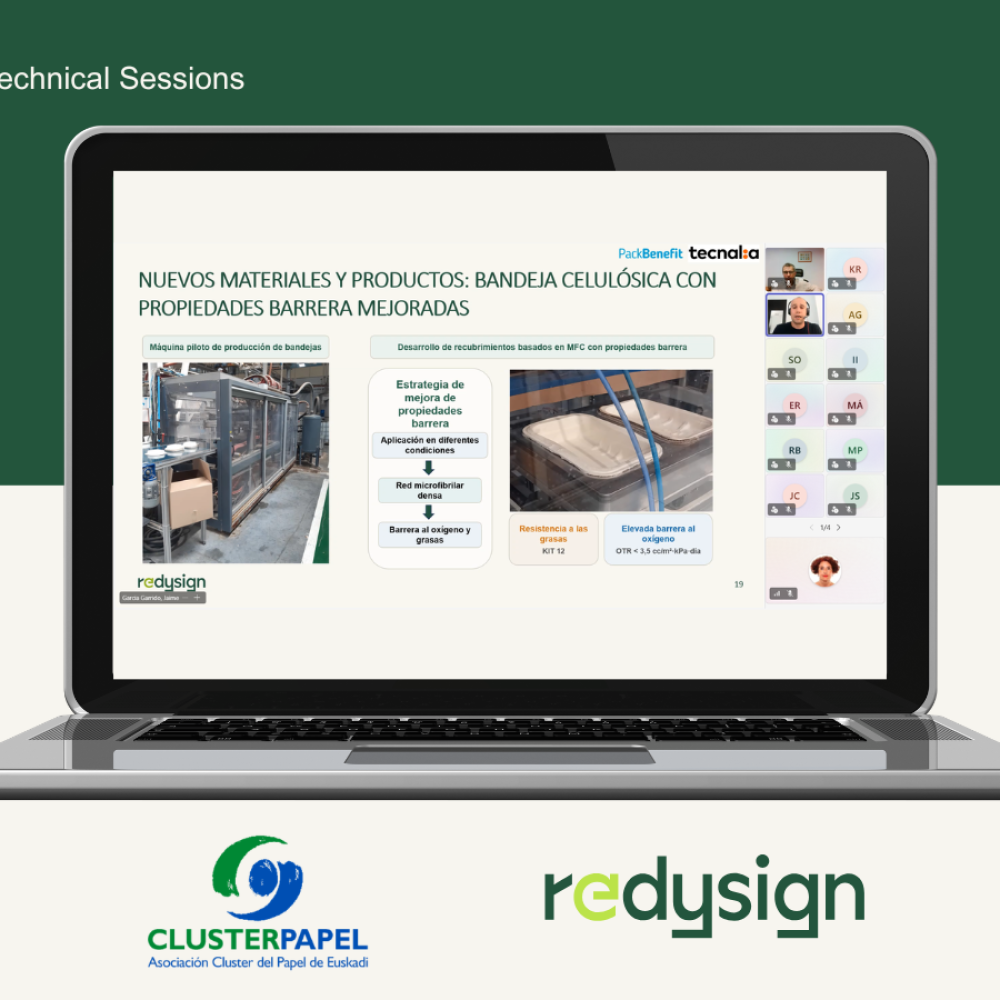
Through the presentation delivered by Jaime García Garrido (TECNALIA), REDYSIGN showcased resource-efficient technologies for producing advanced cellulose-based packaging materials with improved recyclability.
On 23 and 25 June 2026, REDYSIGN presented its latest resource-efficient fibre-based packaging innovations at the Basque Paper Cluster Technical Sessions, organised by the Basque Paper Cluster, for paper industry professionals from Spain and Latin America.
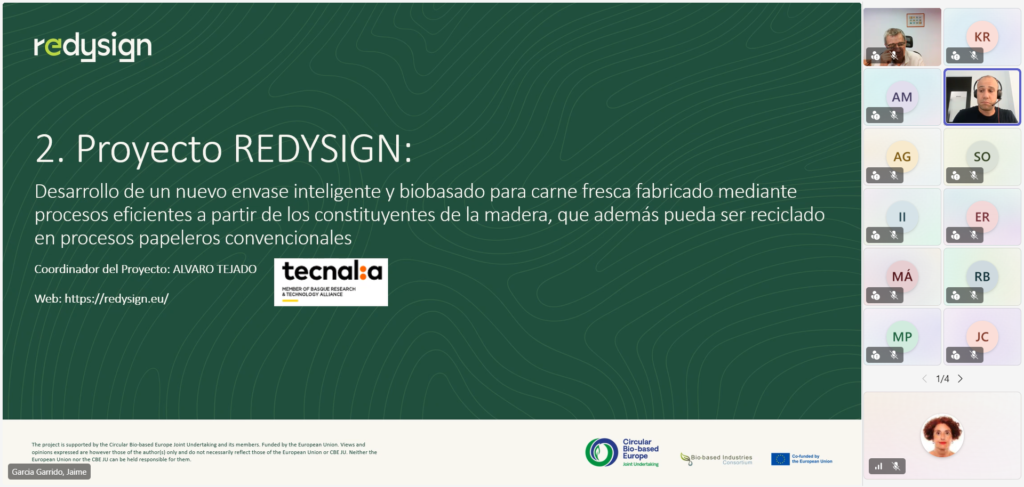
Representing the project, Jaime García Garrido (TECNALIA) delivered the presentation “Innovative cellulosic fibre solutions: improving efficiency, new materials and recyclability“, highlighting how REDYSIGN is developing next-generation fibre-based packaging through innovative manufacturing processes, advanced cellulose-based materials and improved recyclability. The project is developing fully bio-based, smart and recyclable fresh meat packaging made almost entirely from wood-derived materials while improving the efficient use of energy and resources throughout the production process in collaboration with 13 partners: TECNALIA, RISE PFI, METGEN, VALMET, VTT, FIBENOL, PACKBENEFIT, MCAIRLAID’S, EROSKI, FNMT, HOLOSS, FENIX TNT and ZABALA INNOVATION.
The Basque Paper Cluster Technical Sessions brought together around 120 attendees, mainly professionals from the paper and packaging manufacturing industries, alongside representatives from engineering companies, water management providers and industrial consultancies.
A platform for innovation in the paper industry
Organised by the Basque Paper Cluster , the Technical Paper Sessions provide a forum for sharing technological developments and practical solutions that help optimise paper manufacturing from technical, economic and environmental perspectives. Since its foundation in 1998, the Cluster has promoted knowledge exchange across the paper value chain, supporting innovation and competitiveness within the sector.
The 2026 edition focused on presenting market-proven technologies, industrial best practices and future developments that can help drive a more sustainable paper industry.
The first online session, held on 23 June, was aimed at companies based in Spain and gathered more than 74 participants. Topics included stock preparation technologies, water and energy savings, clothing cleaning optimisation, digitalisation for sustainability and decarbonisation, energy-efficient paper drying, and strategies to optimise energy consumption in paper manufacturing.
The second session, on 25 June, targeted professionals from Latin American countries, attracting 46 participants from across Central and South America. The programme explored the complete paper manufacturing process, from raw material preparation to future paper-based products, while also addressing opportunities to improve energy and water efficiency, wastewater treatment, drying optimisation and process digitalisation.
REDYSIGN technologies supporting the transition towards to circular packaging
During his presentations, Jaime García showcased several of the technologies being developed within REDYSIGN to redesign food packaging using renewable wood-based resources while improving manufacturing efficiency and circularity.
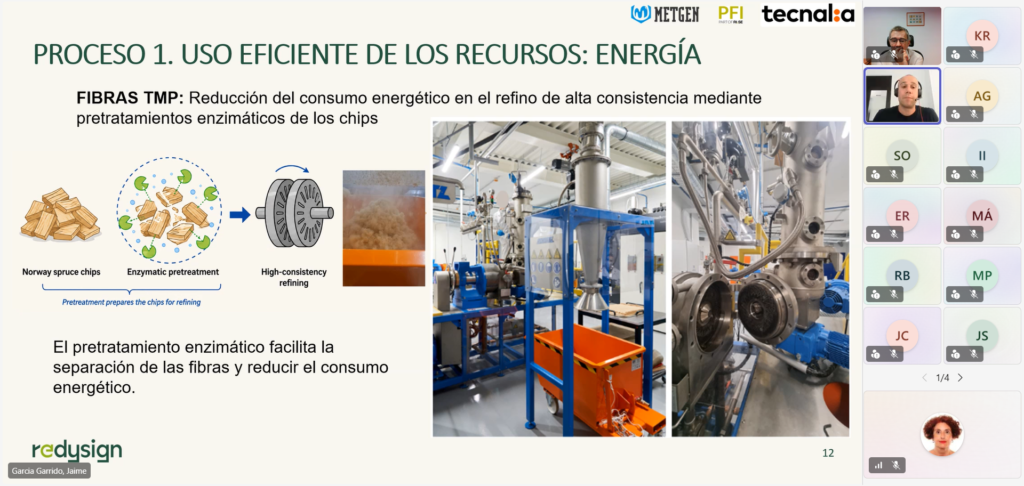
The talks highlighted the project’s work on the energy-efficient production and upgrading of thermomechanical pulp (TMP), including enzymatic pre-treatment of wood chips and its effect on fibre quality, fines generation and shive reduction. The presentation also introduced complementary strategies to obtain microfibrillated cellulose (MFC) from TMP/CTMP fibres through fibre functionalisation and optimised conical refining. New cellulose-based food packaging materials were presented, including moulded fibre trays with improved performance, MFC-based barrier coatings for oxygen and grease resistance, and flexible MFC films for fully fibre-based packaging solutions. The talks also covered recycling strategies for these new packaging materials, including marker-based sorting, microbiological control after food contact, and recovery of recycled fibres suitable for new paper-based products.
These developments demonstrate how REDYSIGN combines innovative fibre processing technologies with advanced cellulose-based materials to create fully bio-based packaging solutions capable of replacing conventional plastic packaging while supporting a more circular use of resources.
“Events such as the Technical Paper Sessions play an important role in connecting research with industrial practice. By sharing its latest developments with paper manufacturers, technology providers and other key stakeholders, REDYSIGN contributes to accelerating the uptake of innovative fibre-based packaging solutions that support the transition towards a more circular and resource-efficient paper industry”, said Jaime García.