A study by Gary Chinga Carrasco (RISE PFI) explores how tailored 3D-printed meshes can optimise dry-forming processes and enhance the performance of fibre-based trays
A recent scientific paper developed within the framework of the REDYSIGN project highlights an innovative approach to improving the manufacturing of fibre-based trays with enhanced geometrical design and mechanical performance.
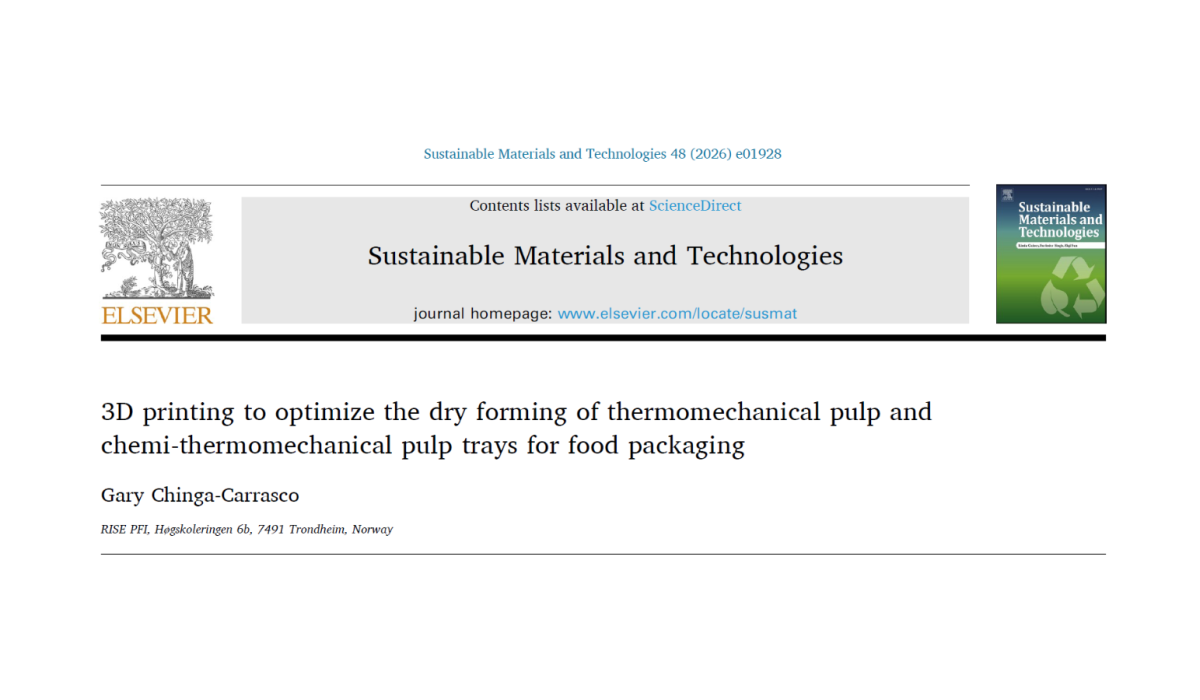
This publication, entitled “3D printing to optimize the dry forming of thermomechanical pulp and chemi-thermomechanical pulp trays for food packaging”, was performed within REDYSIGN and contributes to advancing sustainable fibre-based packaging innovation. “3D printing has advanced rapidly from a hobby and prototyping tool to a method for producing functional processing tools, which we are using to develop trays with complex geometries”, says Dr. Gary Chinga Carrasco, RISE PFI.
The study investigates how 3D-printed meshes can enhance dry-forming processes, enabling the production of trays with more complex geometries and improved mechanical performance.
Advancing dry-forming through digital tools
Dry forming is emerging as a promising, resource-efficient technology for producing sustainable packaging from lignocellulosic fibres. Unlike conventional wet-moulding, it reduces water use and energy consumption, contributing to more sustainable manufacturing processes.
However, achieving complex tray geometries has remained a key challenge. This publication demonstrates how tailored 3D-printed meshes can facilitate fibre deposition during forming, enabling the production of deeper and more intricate tray designs.
The research also highlights the importance of fibre selection, comparing thermomechanical pulp (TMP) and chemi-thermomechanical pulp (CTMP). Although both are lignocellulosic fibres from wood, and share a similar composition, their structural differences affect performance. “In particular, the TMP fibres applied in this study exhibited a morphology characterized by a more disrupted cell wall structure and a higher fines content, which allowed improved densification during forming and resulted in stronger trays”, adds Chinga Carrasco.
Towards more efficient and higher-performing fibre-based trays
By combining advanced fibre processing strategies, digital design and modern 3D printing technologies , this research contributes to improving the design and performance of fibre-based trays. In particular, it enables better control over fibre distribution during forming, which is key to achieving more consistent structures and improved mechanical properties.
A broader perspective onREDYSIGN research
Alongside this work, REDYSIGN continues to explore complementary strategies to enhance the performance of smart fibre-based packaging. Previous research has focused on enzymatic approaches to improve water resistance, addressing one of the key challenges in replacing conventional plastic-based solutions.
Together, these developments illustrate the project’s multidisciplinary approach, combining material innovation with advanced processing techniques to deliver high-performance, recyclable-by-design packaging solutions for fresh meat applications.
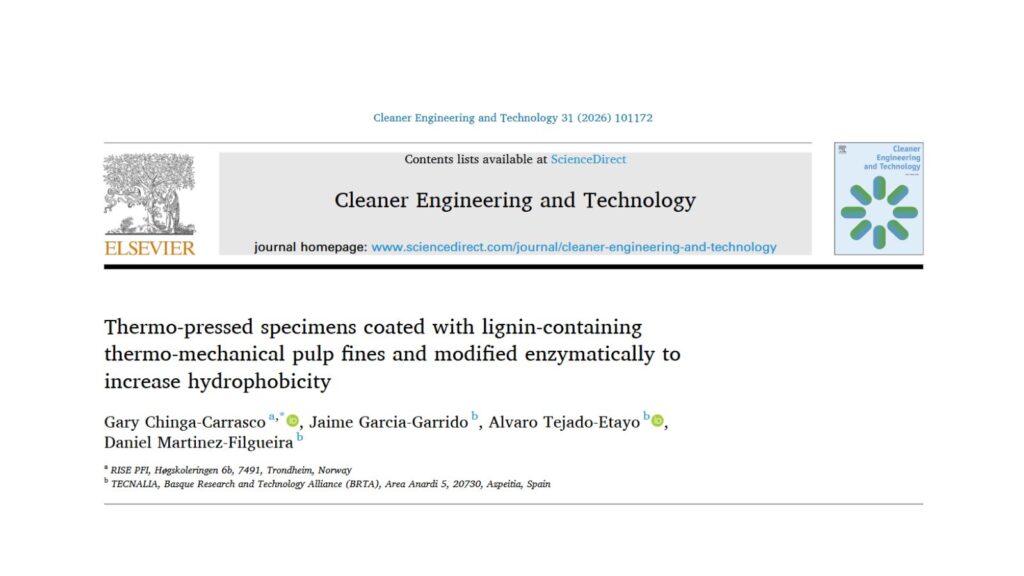
Research publication within REDYSIGN explores enzymatic innovation to enhance water resistance in fibre-based packaging
The scientific paper “3D printing to optimize the dry forming of thermomechanical pulp and chemi-thermomechanical pulp trays for food packaging” was developed by Gary Chinga Carrasco, from RISE PFI, whose work within REDYSIGN contributes to advancing sustainable fibre-based packaging innovation.