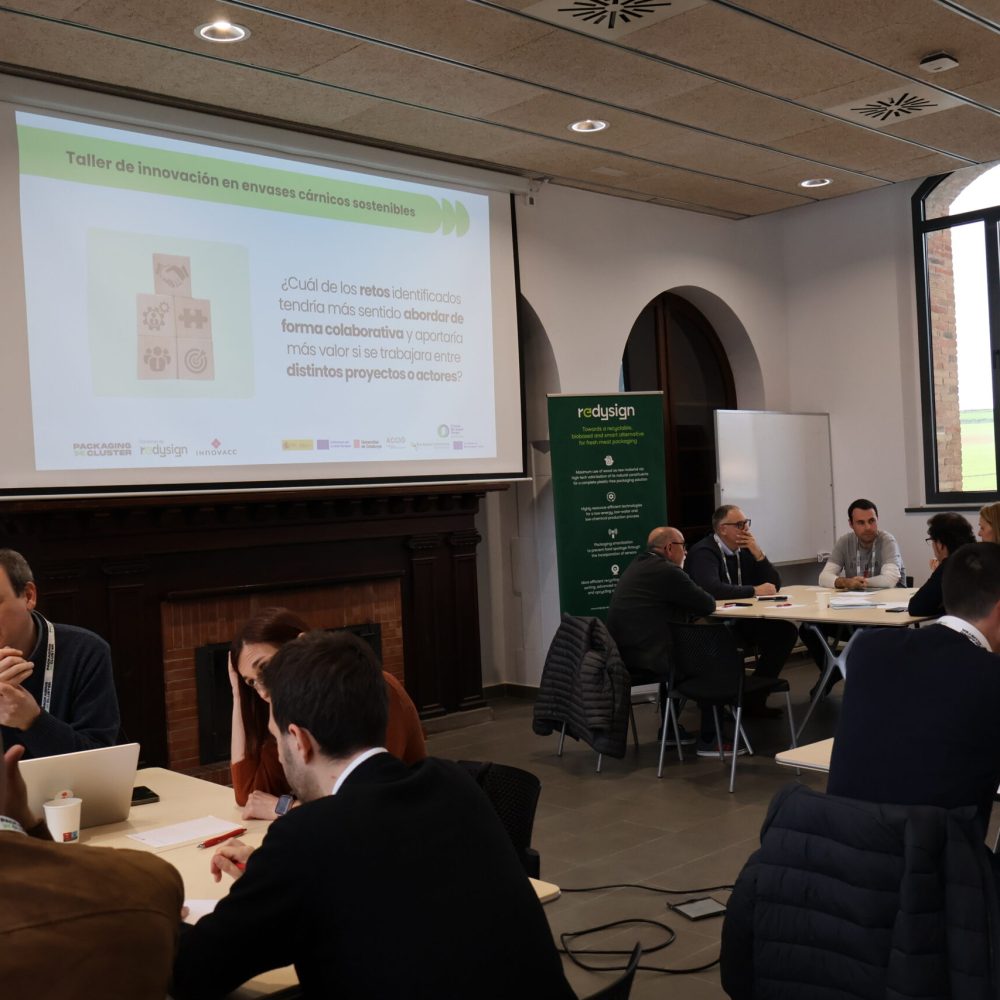
The event fostered cross-sector dialogue on advancing sustainability, functionality and traceability across the meat packaging value chain.
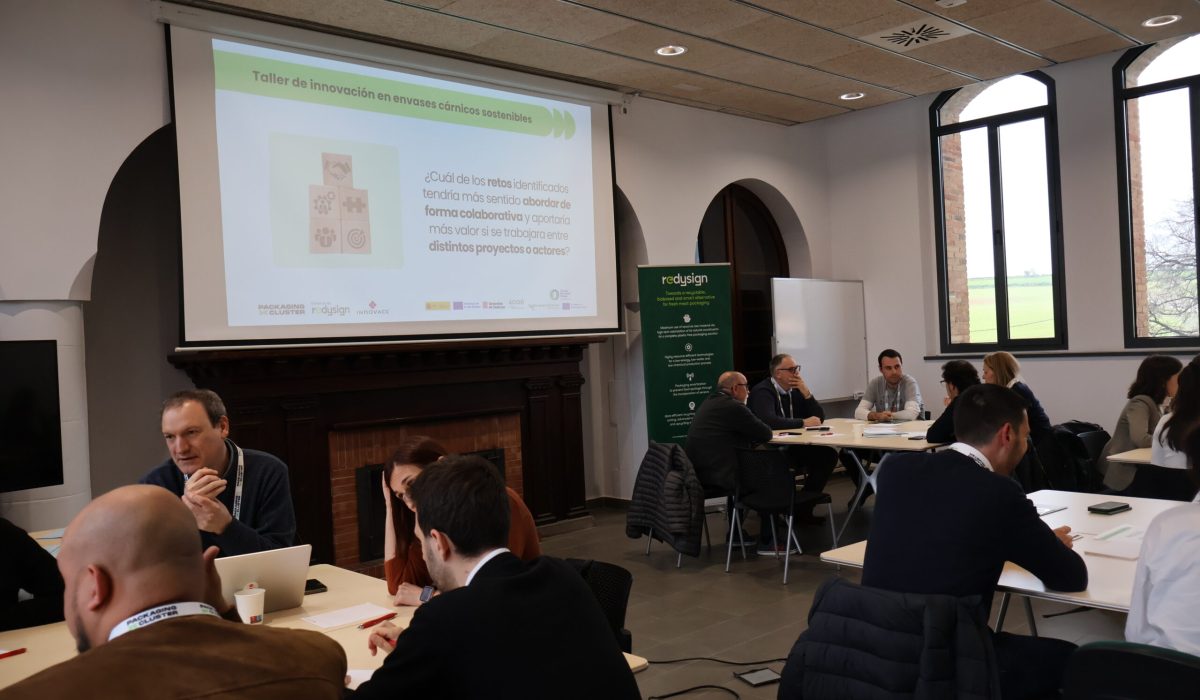
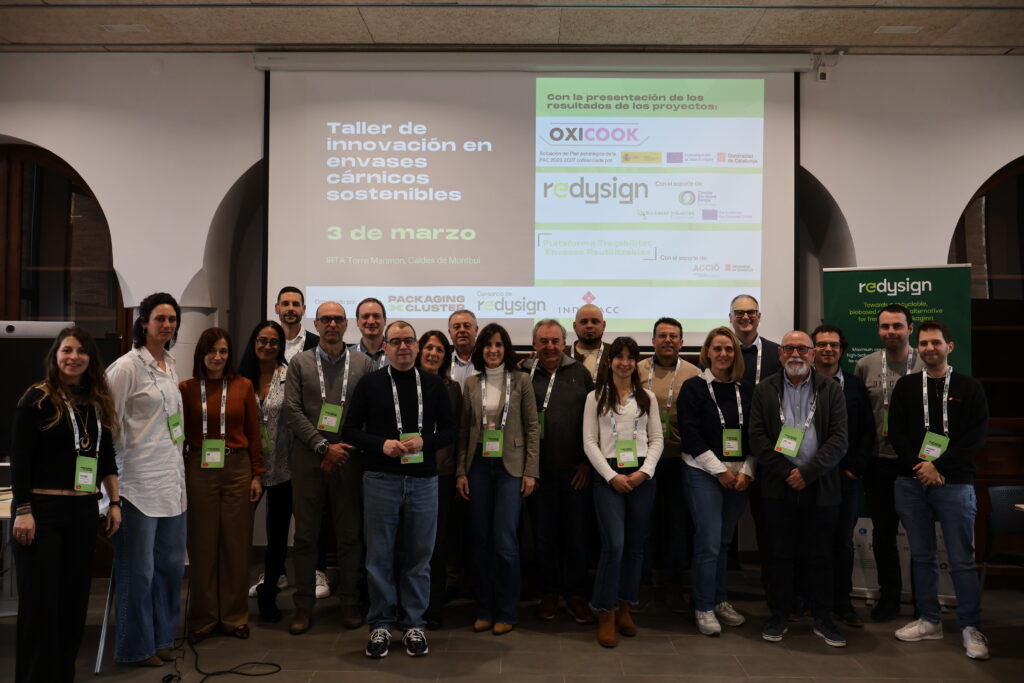
On 3 March 2026, REDYSIGN co-organised a strategic workshop on innovation in sustainable meat packaging. It was held at IRTA Torre Marimon (Caldes de Montbui, Catalonia), bringing together around 30 key actors from across the meat and packaging value chain.
The session was organised in collaboration with Packaging Cluster and INNOVACC and served as a platform to explore synergies between complementary initiatives: REDYSIGN, OXICOOK and the Platform for Traceability and Reusable Packaging Management (ECOPHIR APP).
A shared ambition: accelerating the transition to circular packaging
The workshop gathered stakeholders including packaging manufacturers, meat producers, retailers, technology providers and research centres, reflecting the systemic nature of the transition towards recyclable-by-design solutions.
During the first part of the session, representatives from the three projects presented their approaches to advancing sustainability in the sector:
- REDYSIGN showcased its progress towards the development of smart fibre-based packaging for fresh meat, largely derived from lignocellulosic materials and designed to be recyclable-by-design.
- OXICOOK presented innovations aimed at improving shelf life and preservation strategies.
- ECOPHIR APP highlighted the role of digital tools in enhancing traceability and reusable packaging management.
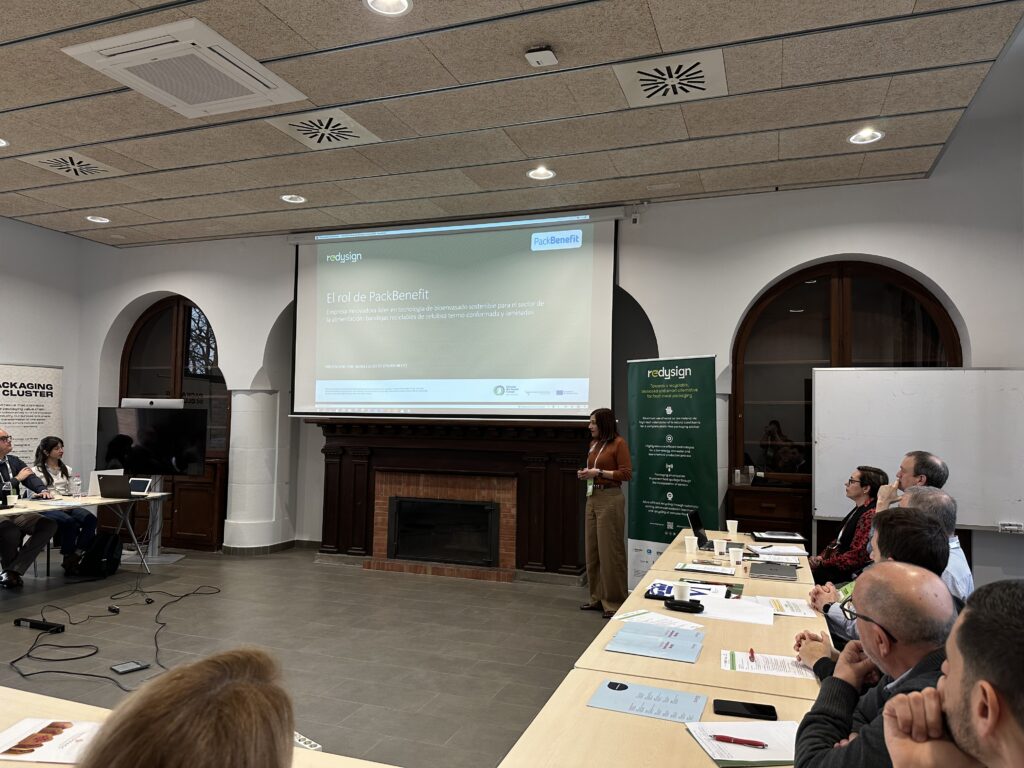
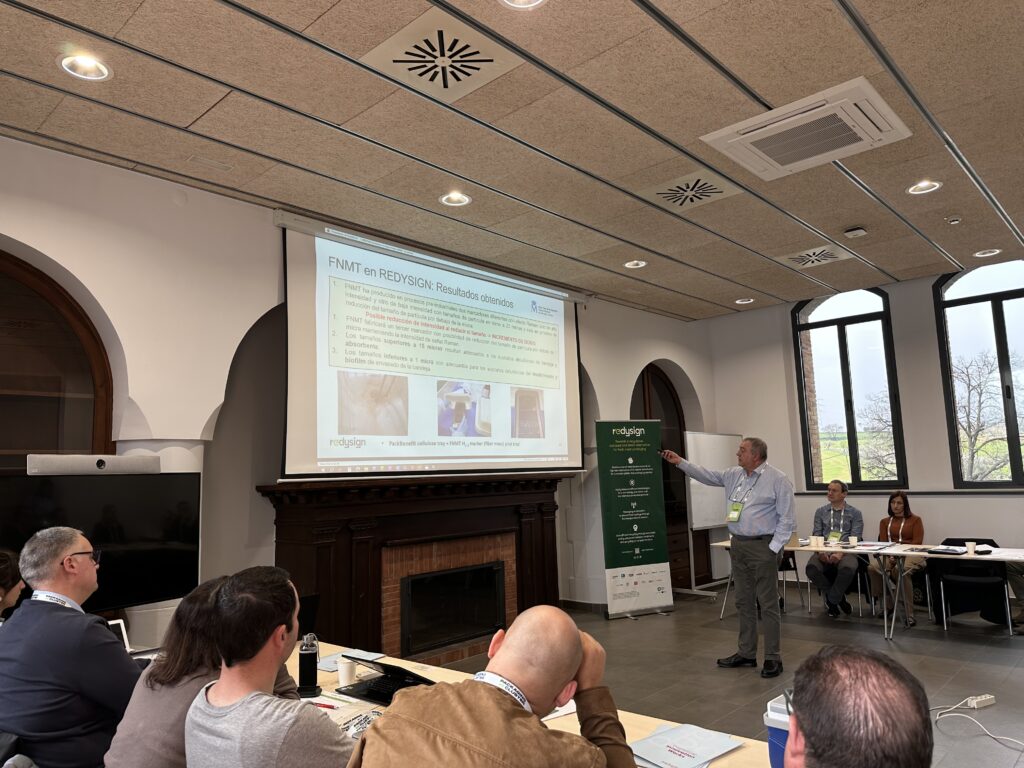
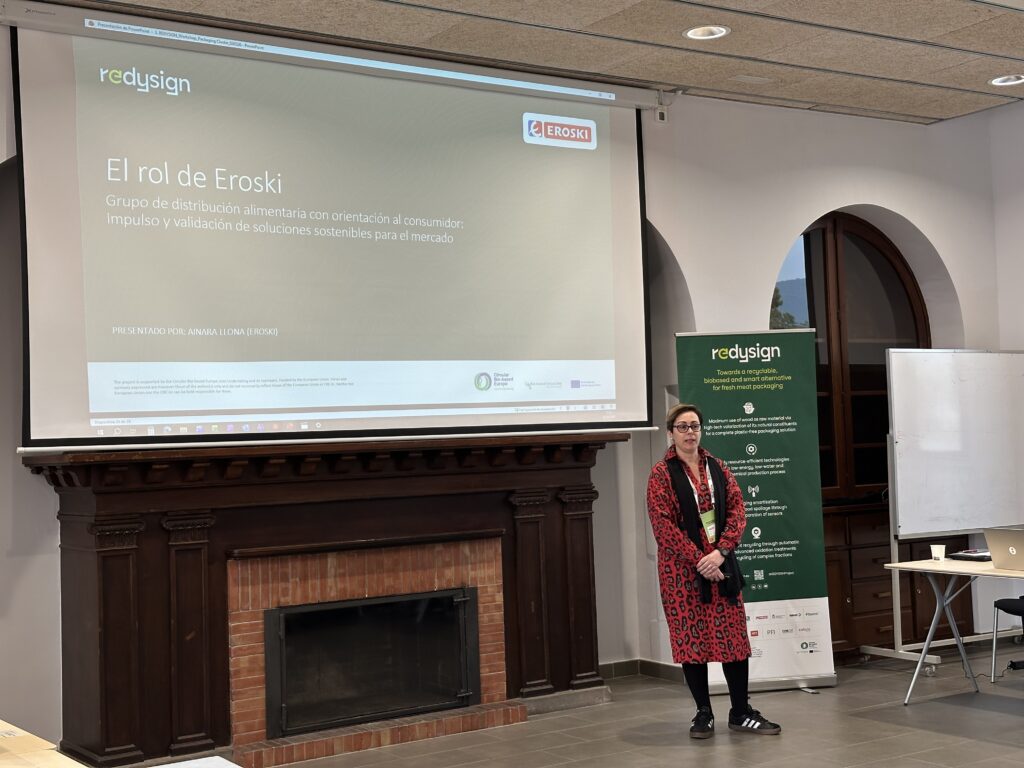
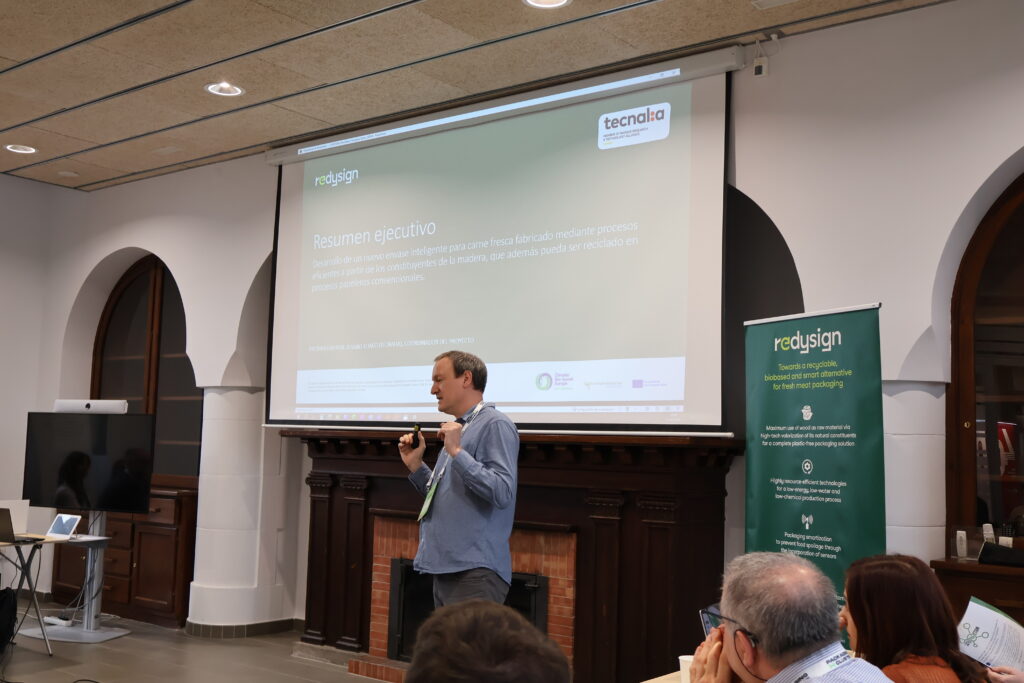
Particular attention was given to the evolving European regulatory landscape, including the Packaging and Packaging Waste Regulation (PPWR). Participants underlined the urgency of developing innovative resource-efficient technologies that ensure compliance while strengthening circularity.
From challenges to collaboration: an interactive methodology
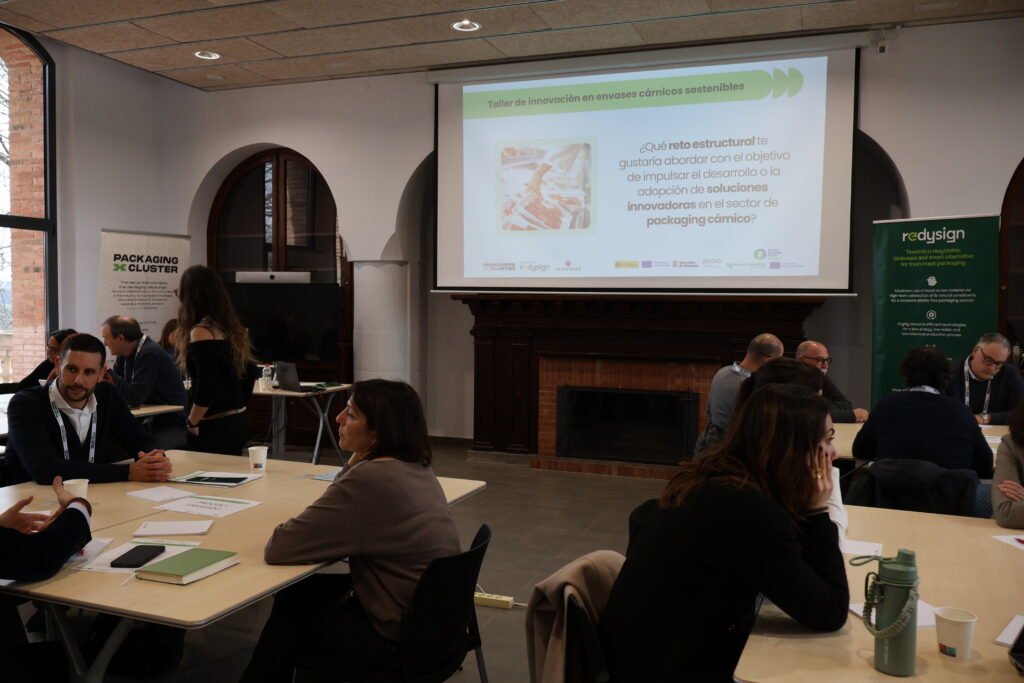
Beyond project presentations, the workshop was designed as a participatory exercise to identify structural challenges and define collaborative pathways. Participants were divided into four thematic working groups:
- Sustainable packaging
- Packaging processes
- Traceability
- Smart packaging
Each group identified one priority challenge whose resolution would generate the greatest added value if addressed collaboratively.
The interactive sessions sparked meaningful exchanges and gave rise to several ideas addressing material development, operational integration, value chain transparency and digital enablement within sustainable packaging systems.
These exchanges highlighted both shared challenges and emerging opportunities, reinforcing the importance of cross-sector collaboration to accelerate the transition towards circular and sustainable meat packaging solutions.
Accelerating the transition towards a circular and sustainable packaging ecosystem
The workshop confirmed that technological innovation alone is not sufficient to transform the sector. Progress towards circular, sustainable meat packaging requires coordinated action across material developers, technology providers, retailers, digital solution providers and policymakers.
By creating a structured space for dialogue, REDYSIGN reinforced its commitment to fostering cross-sector collaboration and accelerating the transition towards more sustainable and circular packaging solutions for the meat sector.