

Fibre-based packaging (FBP) — such as trays, cartons or takeaway containers — offers a sustainable alternative to plastic. However, when these materials are contaminated with organic residues like blood, oils or fats — a common situation in food applications — their recyclability is severely limited. Most of this packaging ends up being landfilled or incinerated, as current recycling systems are unable to process it efficiently.
The REDYSIGN project addresses this challenge by developing a smart, marker-based identification system, combined with advanced detection technologies. This approach enables more accurate sorting and facilitates tailored treatment strategies for contaminated fibre packaging, helping to improve material recovery and reduce environmental impact.
Smart identification to enable better sorting
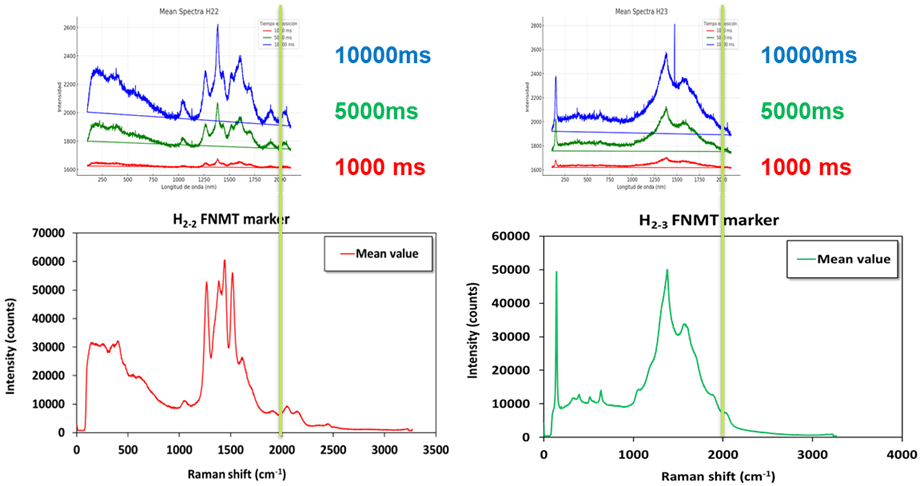
A key innovation in REDYSIGN is the development of smart identification markers by FNMT (Fábrica Nacional de Moneda y Timbre). These markers are integrated into the different components of packaging — including trays, pads and films — without affecting their appearance or function. Their main advantage is that they can be reliably detected using Raman spectroscopy, a technology that reads the unique “signature” of a material without needing to touch or alter it.
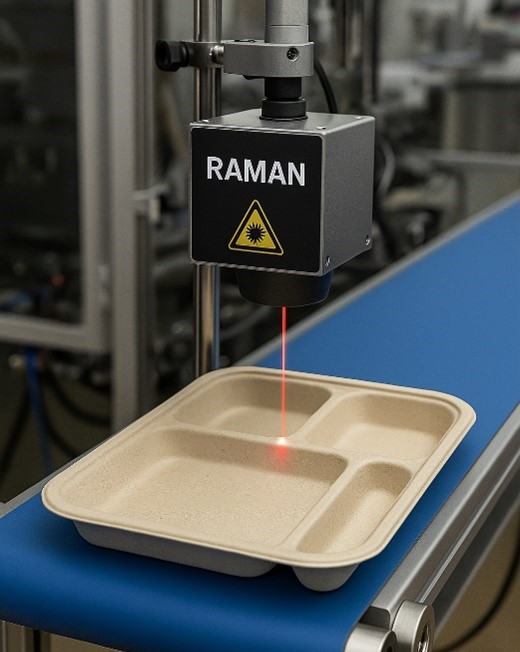
The markers have already been incorporated into trays, and TECNALIA has successfully validated their detection under both static and dynamic (in-line) conditions using Raman sensors. These tests simulate industrial environments and confirm the system’s technical feasibility.
Advantages of REDYSIGN’s marker technology
Compared to traditional sorting systems, the markers introduced by REDYSIGN offer several benefits:
- Use of low-cost, abundant raw materials, potentially suitable for large-scale applications
- Non-intrusive design, invisible to the end user
- Potential for integration into packaging production without altering its functionality
- Compatibility with Raman-based detection systems, which can be adapted to advanced sorting lines
While full-scale industrial deployment requires further development, the promising test results point to the viability of the system in operational conditions.
Improving communication between packaging and recycling systems
Most recycling plants rely on visual recognition or physical properties to sort materials — methods that often fail when packaging is contaminated. REDYSIGN offers an alternative: embedded markers that allow the packaging to be automatically recognised and traced, regardless of its condition.
This improves communication between packaging and sorting systems, enabling more selective classification and routing of contaminated fibre packaging into dedicated treatment streams. As a result, valuable fibre materials that would otherwise be discarded can be recovered more efficiently.
Detecting contamination for smarter sorting
Beyond material identification, REDYSIGN also focuses on detecting contaminants such as fats, proteins and moisture — common causes for rejection in recycling plants. To do this, TECNALIA is combining Raman spectroscopy, near-infrared (NIR) and RGB imaging in a multimodal detection system.
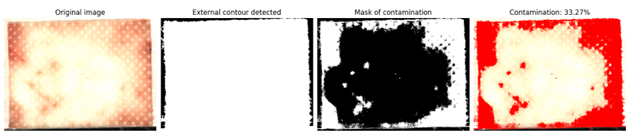
This system can both visually map and chemically analyse contamination on packaging surfaces. Data collected are being used to train AI models that link visual features to chemical content, enabling more accurate sorting decisions — especially in complex, real-world scenarios.
Supporting EU targets and enabling better recovery
Through this enhanced identification and classification strategy, REDYSIGN contributes to the European Union’s 2030 targets for increasing recycling rates in fibre-based packaging. By enabling more precise sorting — particularly of contaminated materials — the system complements existing paper recovery processes and supports a more efficient use of resources.
What’s next?
REDYSIGN will continue refining its detection systems to improve reliability and performance under real operating conditions. These developments aim to bring the technology closer to practical application and support a more circular and efficient packaging system.
Article prepared in collaboration with members of TECNALIA and FNMT team: Jon Ander Iturrioz, Verónica García, Vicente García and Esther Gómez.