Sustainable fibre applications take centre stage: REDYSIGN at 1st ENFiber International Conference
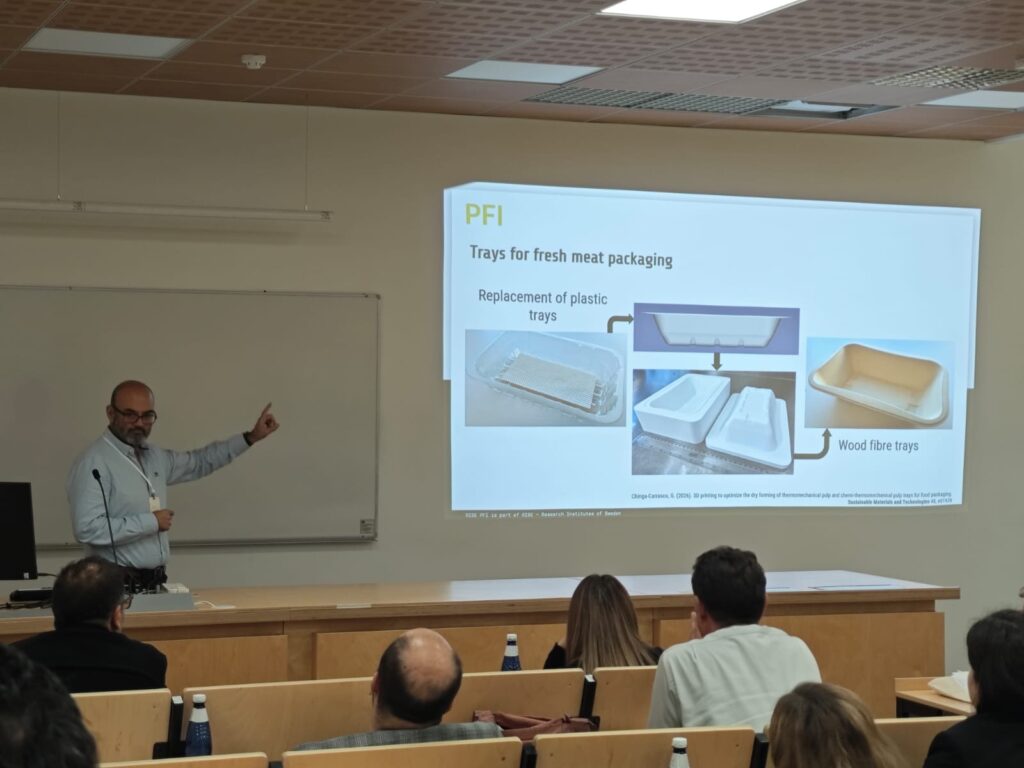
Dr. Gary Chinga Carrasco (RISE PFI) showcased REDYSIGN results on lignocellulosic fibres and thermoformed packaging applications Advances in fibre extraction and valorisation were at the forefront of the 1st ENFiber International Conference, which gathered experts to address the transformation of food and agro-processing waste into high-value materials. The event took place in Tartu, Estonia, from […]
Exploring sustainable food packaging through REDYSIGN at the EPIC Masterclass
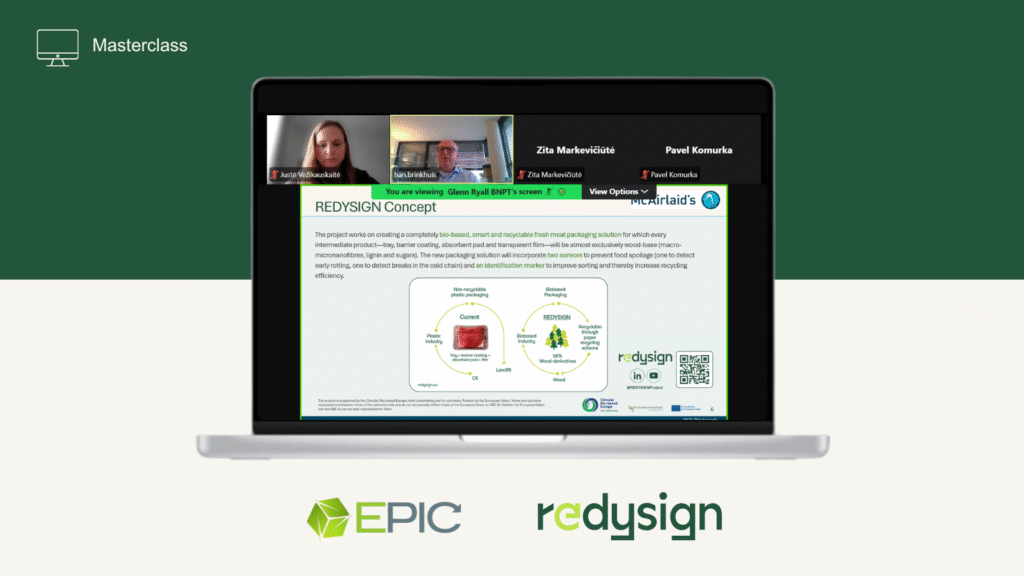
Han Brinkhuis from McAirlaid’s highlights REDYSIGN’s role in advancing sustainable food packaging solutions at the EPIC Masterclass On 15 October 2025, the EPIC Masterclass “Food Packaging Materials & Technologies for a Greener Future” brought together industry experts and innovators to explore the latest advancements in sustainable food packaging. Representing REDYSIGN, Han Brinkhuis from McAirlaid’s Vliesstoffe […]
Dry Forming: An eco-friendly approach to fibre products

The interest in lignocellulosic fibres is steadily increasing, as they represent a widely available resource and a main component of renewable, biodegradable and recyclable thermoformed products. Lignocellulosic fibres are most promising to replace single-use plastic products, as part of a developing bio- and circular economy. Various types of lignocellulosic fibres have been utilized from e.g. […]
REDYSIGN at CIADICYP 2024: Advancing Sustainability and Innovation in the Pulp and Paper Industry
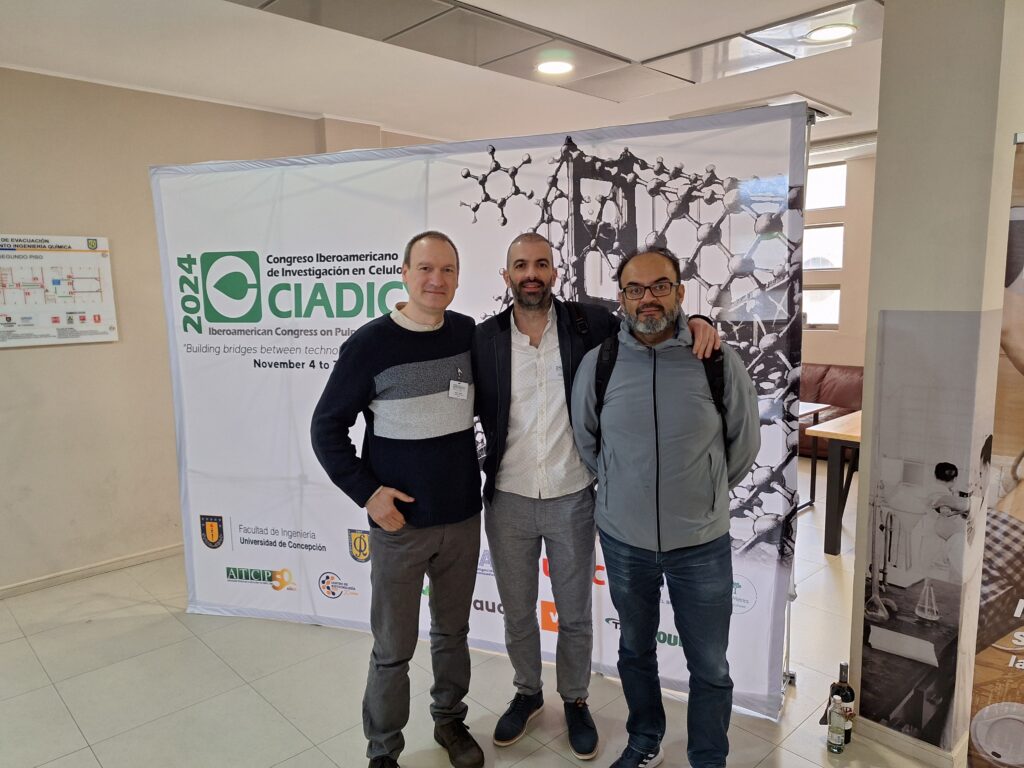
REDYSIGN was represented at the 13th Iberoamerican Congress of Pulp and Paper Research (CIADICYP), held in Concepción, Chile, from November 4 to 7. The event featured the participation of REDYSIGN partners RISE PFI and TECNALIA and offered a unique opportunity to present some of the project’s research and expand its influence within the scientific community. […]
Cellulose functionalization: a little push to widen the potential of natural compounds

The development of the bioeconomy requires maximizing the use of available natural resources, among which cellulose (mostly in the form of cellulose fibers) stand out as the most abundant bio-based material on Earth. Those fibers, derived from plant cell walls, offer a sustainable alternative to non-sustainable synthetic materials, aligning perfectly with the principles of the […]