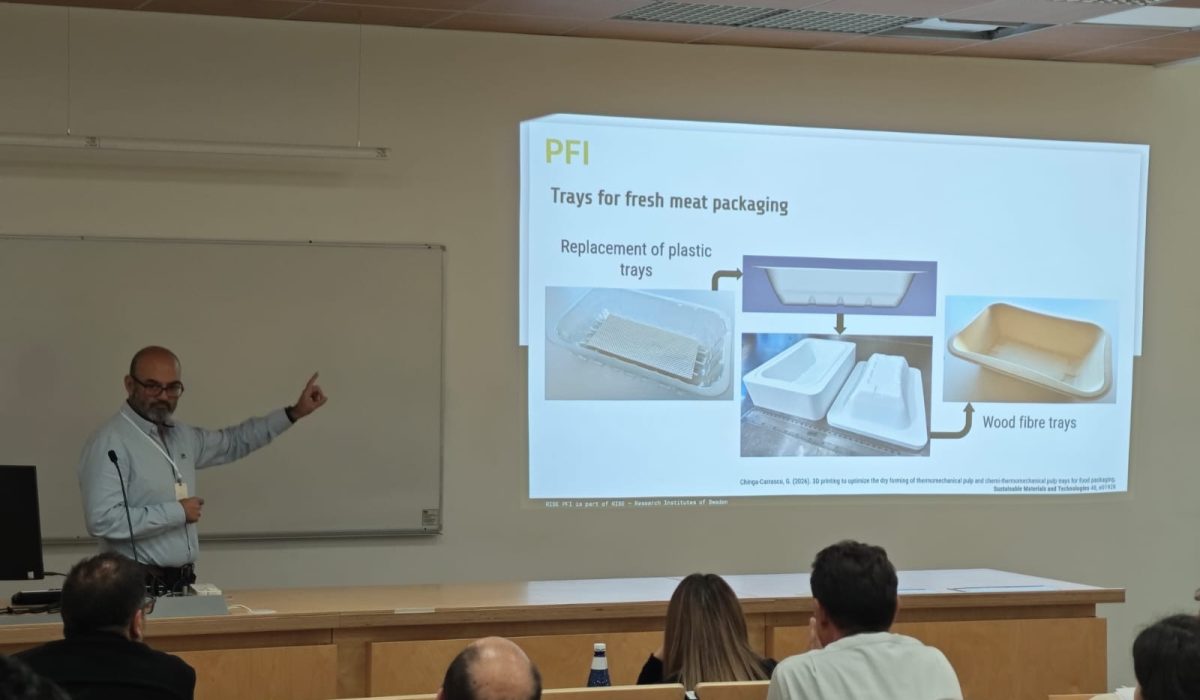
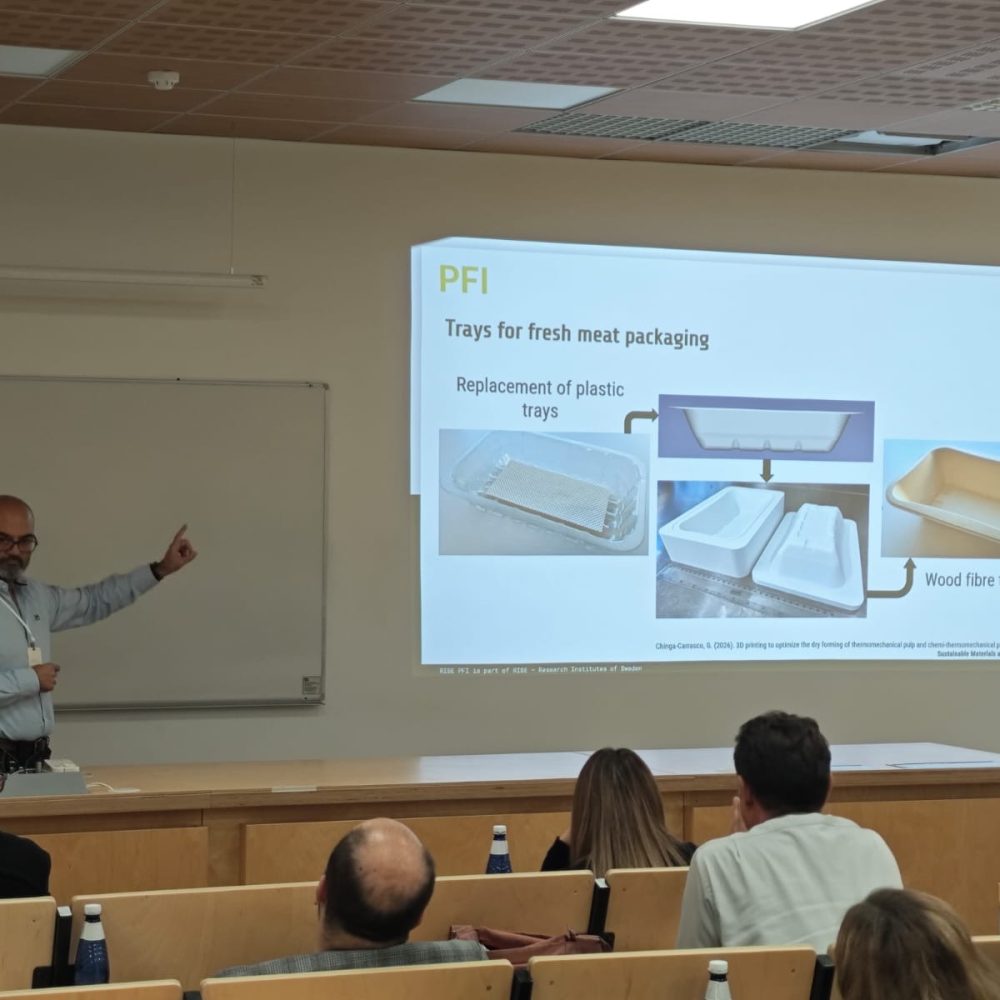
Dr. Gary Chinga Carrasco (RISE PFI) showcased REDYSIGN results on lignocellulosic fibres and thermoformed packaging applications
Advances in fibre extraction and valorisation were at the forefront of the 1st ENFiber International Conference, which gathered experts to address the transformation of food and agro-processing waste into high-value materials. The event took place in Tartu, Estonia, from 4 to 6 May 2026, at the Estonian University of Life Sciences, and was organised within the framework of the ENFiber COST Action (CA24111).
The REDYSIGN participated in the gathering, represented by Dr. Gary Chinga Carrasco (RISE PFI), alongside researchers, industry representatives and COST Action members, contributing to a platform for exchanging knowledge on fibre extraction methods, valorisation pathways, bioactive properties and advanced materials.
Fibre valorisation and advanced materials: REDYSIGN at ENFIber
The ENFiber International Conference set out to strengthen collaboration between research and industry while advancing knowledge on fibre extraction from food and agro-processing waste. Throughout the event, participants explored innovative and sustainable extraction methods, the functional properties of fibres and their potential applications, as well as the challenges linked to standardisation, quality control and regulatory frameworks.
The programme combined keynote lectures, oral and poster presentations, together with ENFiber Management Committee and Working Group meetings. Thematic sessions covered a wide range of topics, including feedstocks, green extraction technologies, industrial scale-up, fibre characterisation and functional performance, as well as regulatory perspectives.
Within this context, REDYSIGN contributed to Session 3: Cellulose, Biopolymers and Advanced Materials, held on 4 May 2026. The session focused on the development of high-performance materials through the valorisation of natural fibres, highlighting the use of sustainable bio-based components such as cellulose, lignin and chitosan.
During the session, Dr. Gary Chinga Carrasco delivered the presentation “Lignocellulosic Fibres – Quantification of Fibre Morphology and Applications in Thermoformed Products”. The presentation showcased key results from REDYSIGN, particularly the development of fibre-based trays for fresh meat packaging. It provided insights into the engineering characteristics of these trays and the processing techniques involved, especially focusing on dry forming and thermo-pressing.
These developments build on recent scientific advances achieved within the project, notably the publications “3D printing to optimize the dry forming of thermomechanical pulp and chemi-thermomechanical pulp trays for food packaging” and “Thermo-pressed specimens coated with lignin-containing thermo-mechanical pulp fines and modified enzymatically to increase hydrophobicity”.
The presentation was very well received and generated lively discussion among participants, reflecting strong interest in the potential of lignocellulosic components for the development of advanced and sustainable materials.
“The conference provided a very good opportunity to present the latest results from the REDYSIGN project and also get positive feedback from an engaged and motivated ENFiber community. The complementarity among the participating members is a very good opportunity for future collaboration.”
ENFiber COST Action: Driving progress
The ENFiber COST Action – European Network for Valorising Food Processing Waste into Sustainable Fibres has been running since 25 September 2025 and will continue until 22 September 2029. Its objective is to address the challenge of food processing waste by transforming underutilised by-products into commercially viable and sustainable fibres.
As part of this initiative, Dr Gary Chinga Carrasco, a member of the REDYSIGN consortium, serves on the Management Committee and actively contributes to shaping the scientific strategy, defining the objectives and guiding the overall direction of the Action, while also supporting and promoting its activities.
“The conference provided a valuable platform for interdisciplinary exchange and insightful discussions, fostering collaboration between academia and industry in areas such as selection of relevant biomass resources, green extraction technologies, standardisation and industrial scale-up”.
This was the first edition of the ENFiber conference and it marked an important step forward in advancing circular food systems and driving innovation in fibre valorisation.