

Modern lifestyles increasingly involve weekly or monthly purchases of fresh meat, which means it is rarely consumed immediately after purchase. This shift creates a pressing need for innovative packaging solutions that can preserve quality and safety over extended periods. Advanced barrier coatings play a crucial role in this context, as they help maintain freshness and extend the shelf life of meat by protecting it from oxygen and moisture. At the same time, these solutions must align with evolving sustainability standards, prioritizing plastic-free and environmentally responsible materials. The REDYSIGN project responds to this dual challenge—meeting both performance and sustainability requirements— by advancing the development of sustainable packaging exclusively derived from wood-based materials, engineered to extend the shelf life of fresh produce while ensuring full compatibility with established recyclability standards.
PACKBENEFIT: Committed to sustainable tray solutions
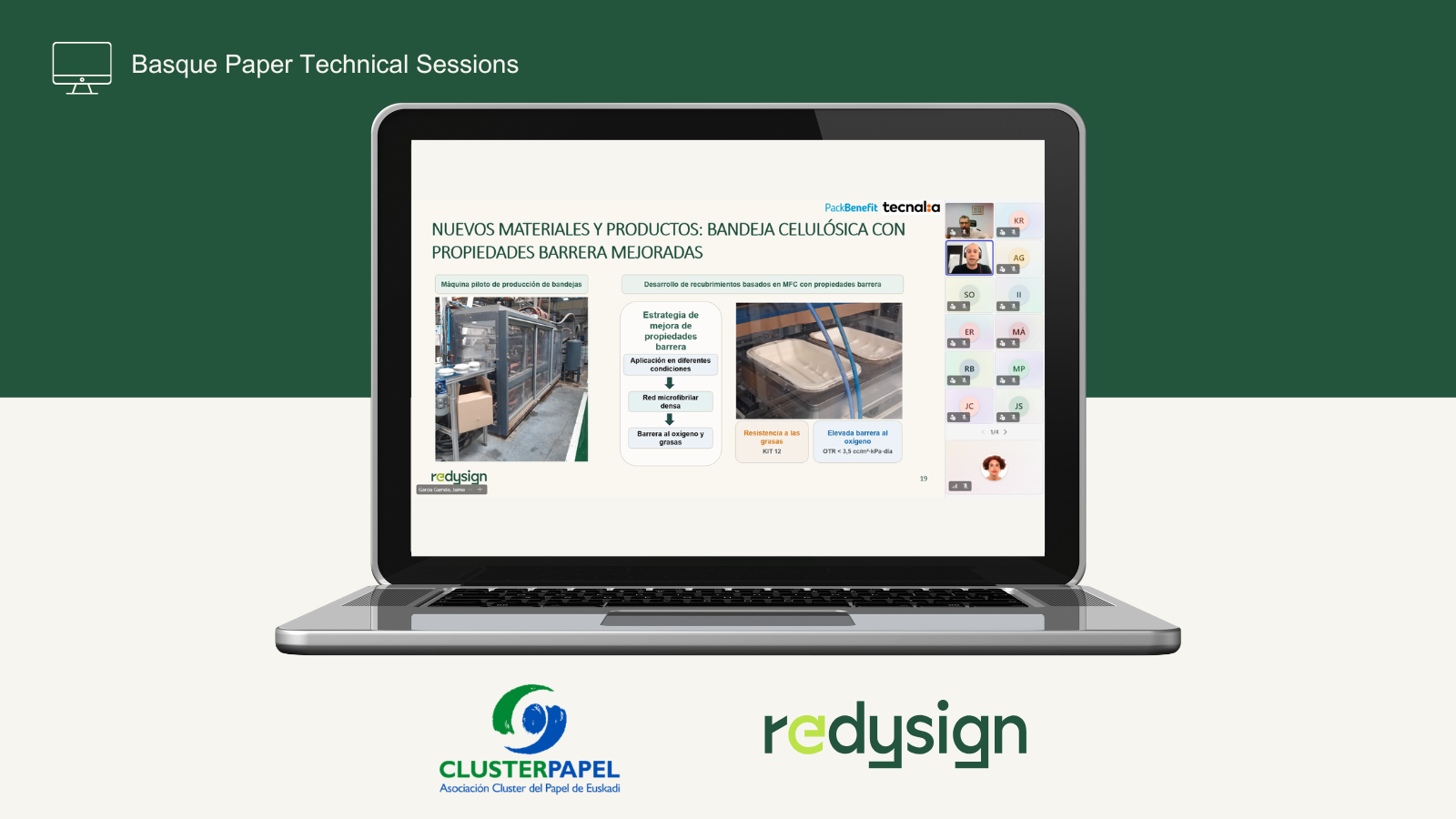
The trays currently produced at PACKBENEFIT (with more than 90% cellulose) are designed to have a wide range of barriers to oxygen, humidity and to be suitable for heating in the oven or microwave depending on the lamination liner used. However, in line with its strong commitment to sustainability, PACKBENEFIT decided to take a step further by joining the REDYSIGN project, aimed at designing cellulose trays that are completely plastic-free while maintaining the same functionality. This development is fully in line with the objectives of the new Packaging and Packaging Waste Regulation (PPWR) and the Single-Use Plastics (SUP) Directive, which encourage the replacement of fossil-based plastics, the design of recyclable packaging, and the transition towards circular, bio-based material solutions.
How is REDYSIGN advancing plastic-free barrier technologies?
As part of the project, TECNALIA, METGEN and RISE-PFI are advancing in the development of plastic-free barrier coatings based on wood constituents that, when applied to PACKBENEFIT’s cellulose tray, replicate the properties of plastic films without compromising the trays’ recyclability. These natural compounds are:
- Lignin, an essential component of wood, which gives rigidity and water resistance to plant structures, has been extracted and enzymatically modified to allow its application on moulded cellulose trays.
- Lignocellulosic fibers have been treated to be converted in micro-nanofibers (LCMNF) that, once applied, improve the tray resistance to grease and gases.
Although the tests carried out by PACKBENEFIT to manufacture trays with these new formulations and materials have yielded some satisfactory results, significant challenges remain in optimizing the application of plastic-free barrier coatings. Both the materials and the application technology must ensure a homogeneous coating, with consistent thickness and strong adhesion to prevent detachment and quality defects. In addition, the coatings must be compatible with the lidding films that guarantee airtight sealing while remaining peelable and thus easy to open, a development line that is also part of the REDYSIGN initiative.
By developing innovative plastic-free, bio-based coatings with effective barriers to liquids and gases, REDYSIGN demonstrates how sustainable materials can match high performance standards. These recyclable fibre-based solutions embody the Safe and Sustainable by Design approach, enabling their reintegration into papermaking cycles and contributing to a truly circular packaging economy.
Article prepared in collaboration with Nuria Escudero and Rebeca Valladares from PackBenefit, Álvaro Tejado from TECNALIA (project coordinator), Gary Chinga Carrasco and Eva Pasquier from RISE PFI, and Pauliina Salorante from MetGen.