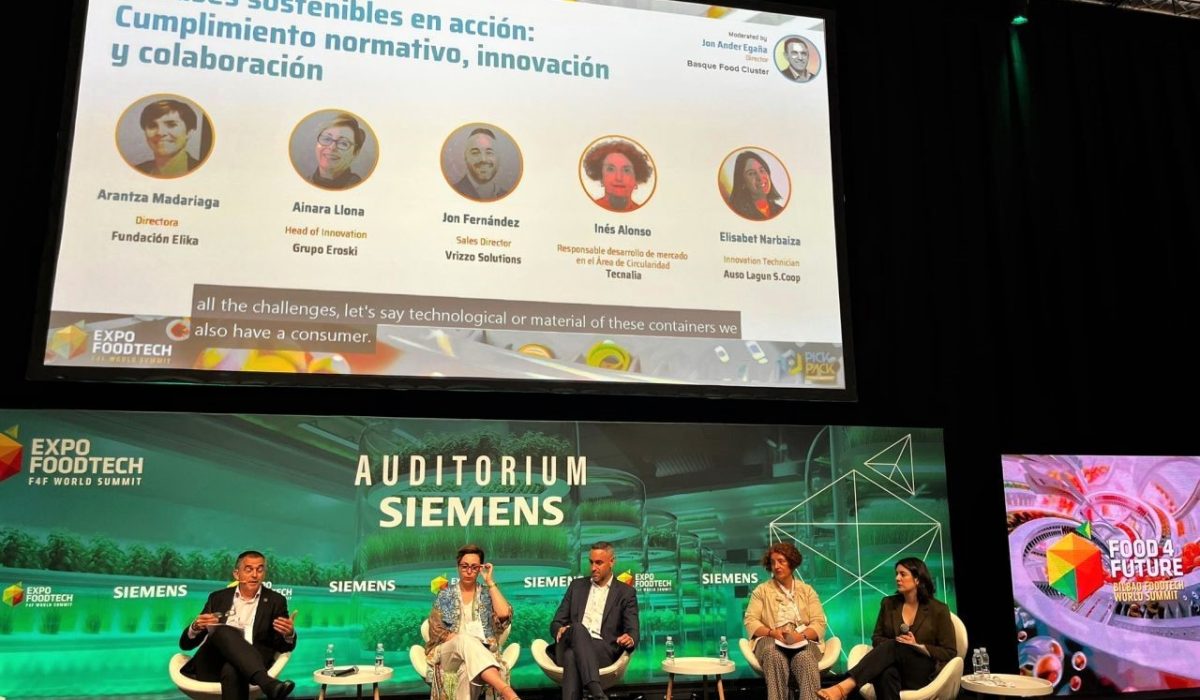
The project presented its latest developments and shared insights on the transition towards circular food packaging during a high-level discussion on innovation, sustainability and the new PPWR regulatory framework.
REDYSIGN showcased its progress and vision for bio-based food packaging at one of Europe’s leading FoodTech events. The future of sustainable food packaging was one of the key topics discussed at Food4Future 2026, where REDYSIGN contributed to the debate on innovation, regulatory compliance and collaboration across the packaging value chain.
Held from 27 to 29 May 2026 at the Bilbao Exhibition Centre (BEC) in Barakaldo, Spain, Food4Future brought together thousands of professionals, technology providers, researchers and industry leaders to explore the latest trends and innovations shaping the future of the food and beverage sector.
Alongside the Expo FoodTech, the Food4Future World Summit featured more than 300 speakers across several thematic forums covering topics such as sustainable food systems, food waste management, logistics, automation, robotics, artificial intelligence, data analytics, blockchain and digital transformation. The event also hosted dedicated innovation initiatives, including the FoodTech Innovation Hub and the FoodTech Innovation Awards.
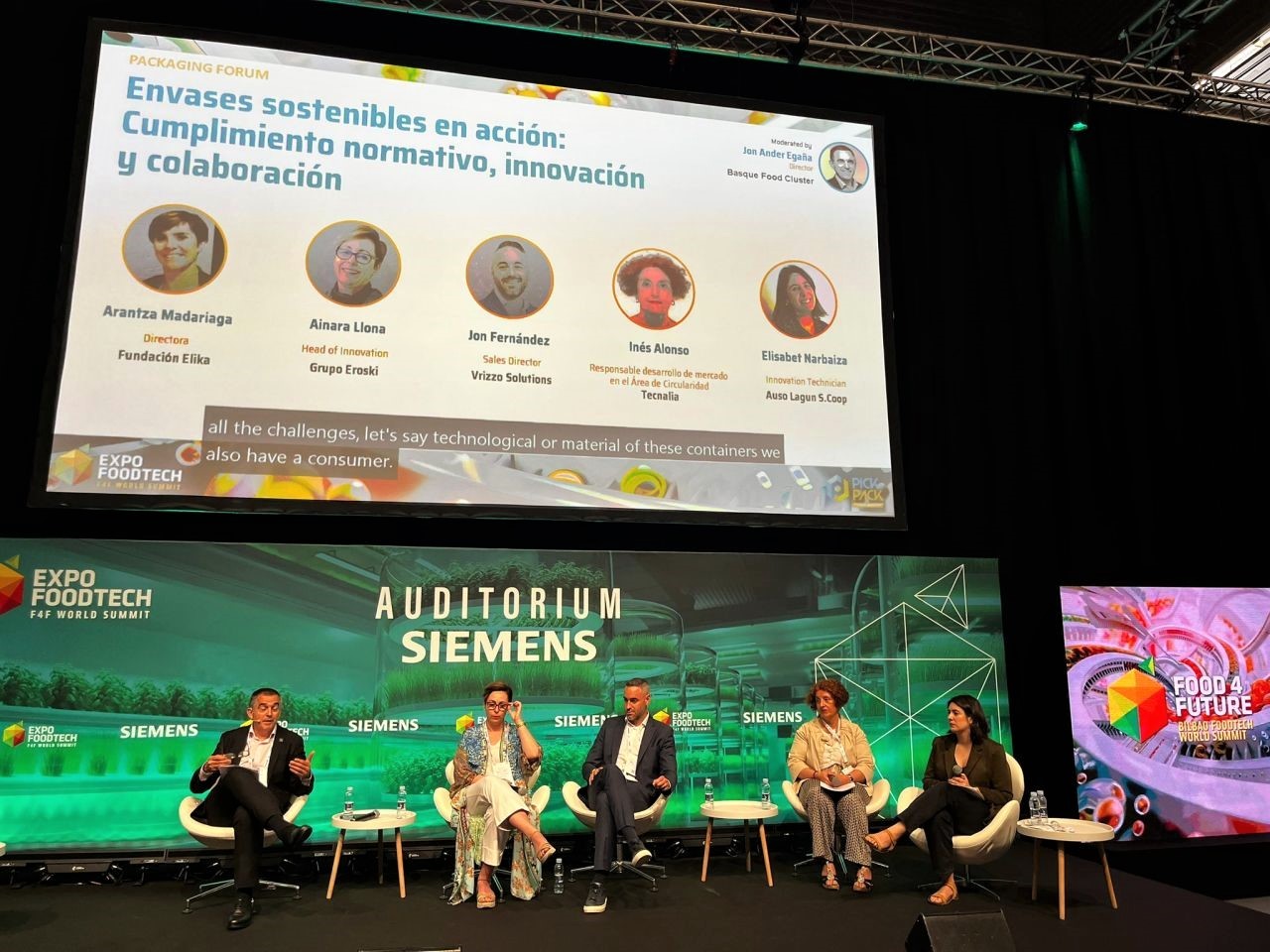
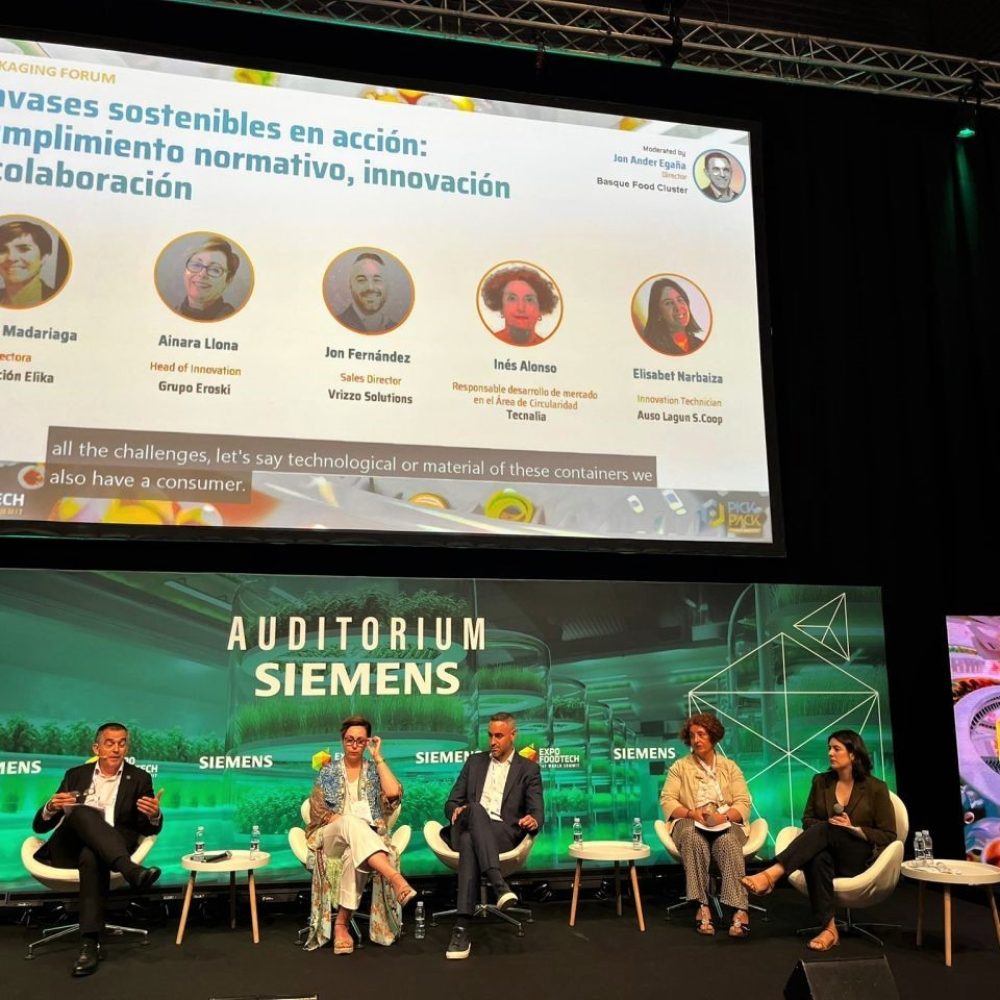
Represented by Ainara Llona (EROSKI) and Inés Alonso (TECNALIA), REDYSIGN took part in the discussion on how innovation and collaboration can support the transition towards more sustainable, circular and recyclable food packaging solutions.
REDYSIGN ON STAGE
On 28 May, REDYSIGN was represented during the roundtable “Sustainable Packaging in Action: Regulatory Compliance, Innovation and Collaboration”, organised by ONTZI – the Basque Food Packaging Innovation Hub.
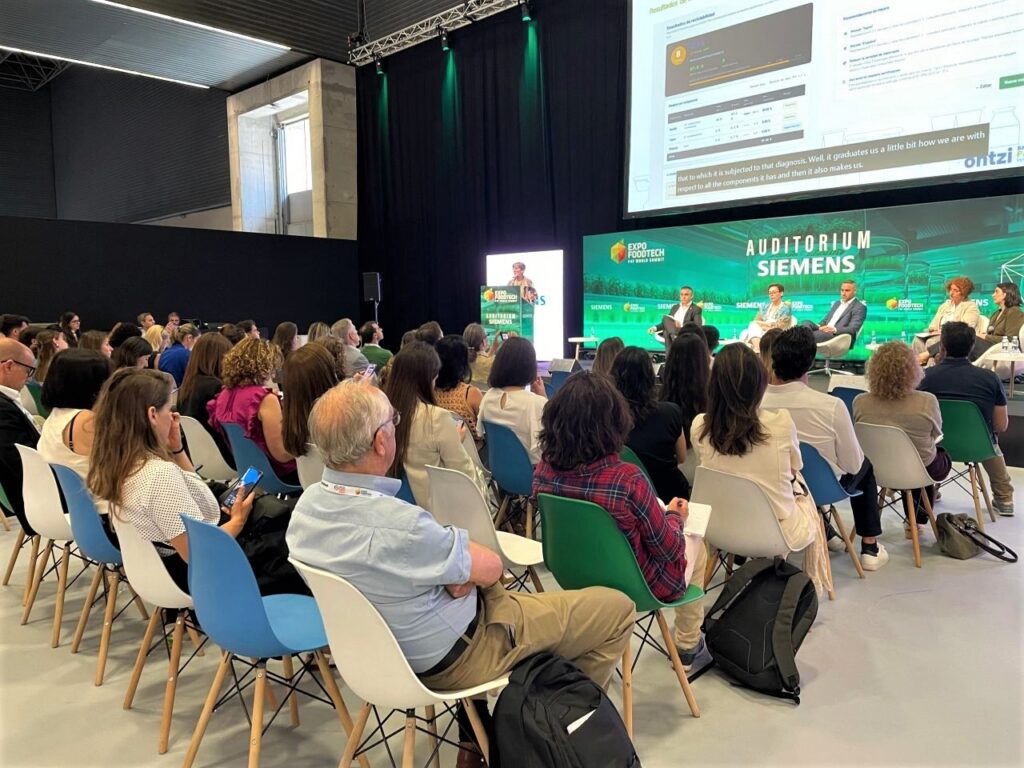
The session brought together around one hundred representatives from the food industry, retail sector, packaging manufacturers, technology centres and public organisations to exchange experiences on regulatory compliance, implementation challenges and emerging innovations. Participants included entities such as AUSOLAN, VRIZZO and ELIKA, creating a valuable forum for discussing the future of sustainable packaging.
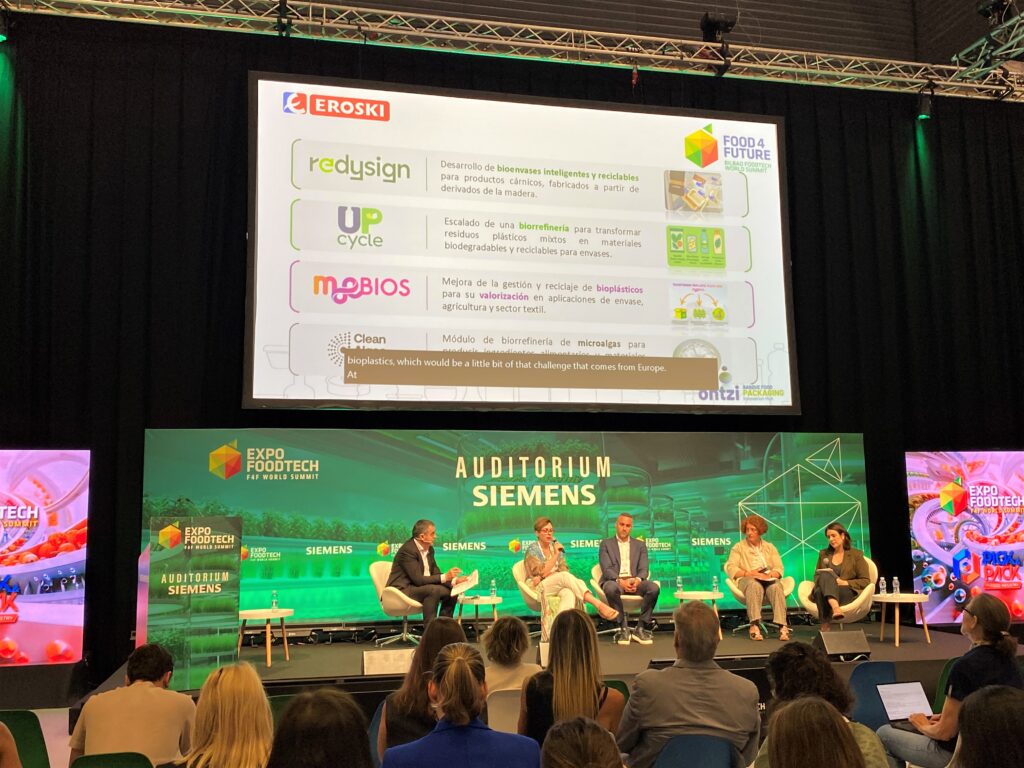
During the discussion, EROSKI presented several European research and innovation initiatives focused on the development of more sustainable packaging solutions, including REDYSIGN. The presentation provided an overview of the main objectives and achievements of these projects, with particular emphasis on REDYSIGN’s technical developments and the demonstration activities carried out to date under real conditions.
The discussion also highlighted the importance of collaboration across the entire packaging value chain. Retailers, technology developers, material producers, recyclers and research organisations all have a role to play in accelerating the transition towards circular and environmentally responsible packaging systems.
“Inter-project cooperation is a powerful driver of innovation and collective risk reduction.”
Ainara Llona (EROSKI).
KEY TAKEAWAYS FROM THE SESSION: PPWR REGULATION
One of the central topics addressed during the roundtable was the implementation of the new European Packaging and Packaging Waste Regulation (PPWR) and the current level of preparedness within the sector.
According to the conclusions highlighted by the Basque Food Cluster after the session, the overall message was clear: many organisations are still at an early stage of adapting to the new regulatory framework.
Several figures shared during the session illustrated the scale of the challenge:
- 90% of companies recognise that they are still in the early stages of adapting to the new regulation.
- 50% report having limited knowledge of the regulatory requirements.
- 71% have not yet systematically implemented strategies to reduce packaging weight and volume.
- 63% remain uncertain about their ability to meet the recycled content targets set for 2030.
Beyond compliance, the real challenge is integrating sustainability requirements into long-term business strategies rather than approaching them as a purely regulatory exercise. For many companies, particularly SMEs and micro-enterprises, this transition involves balancing multiple priorities simultaneously: ensuring food safety, maintaining product shelf life, controlling costs, adapting to new materials and responding to increasingly sustainability-conscious consumers.
In this context, Inés Alonso (TECNALIA) emphasised the need to accelerate the development and adoption of new solutions:
“The food industry is looking for packaging alternatives that can guarantee food safety, improve the environmental performance of packaging, and ensure compliance with regulations. Projects such as REDYSIGN are helping bring these solutions closer to end users and facilitating the transition towards new packaging concepts”.
By participating in Food4Future, representatives from the REDYSIGN Project contributed to this important discussion while reinforcing its commitment to delivering innovative packaging solutions that support both environmental sustainability and the competitiveness of the European food industry.