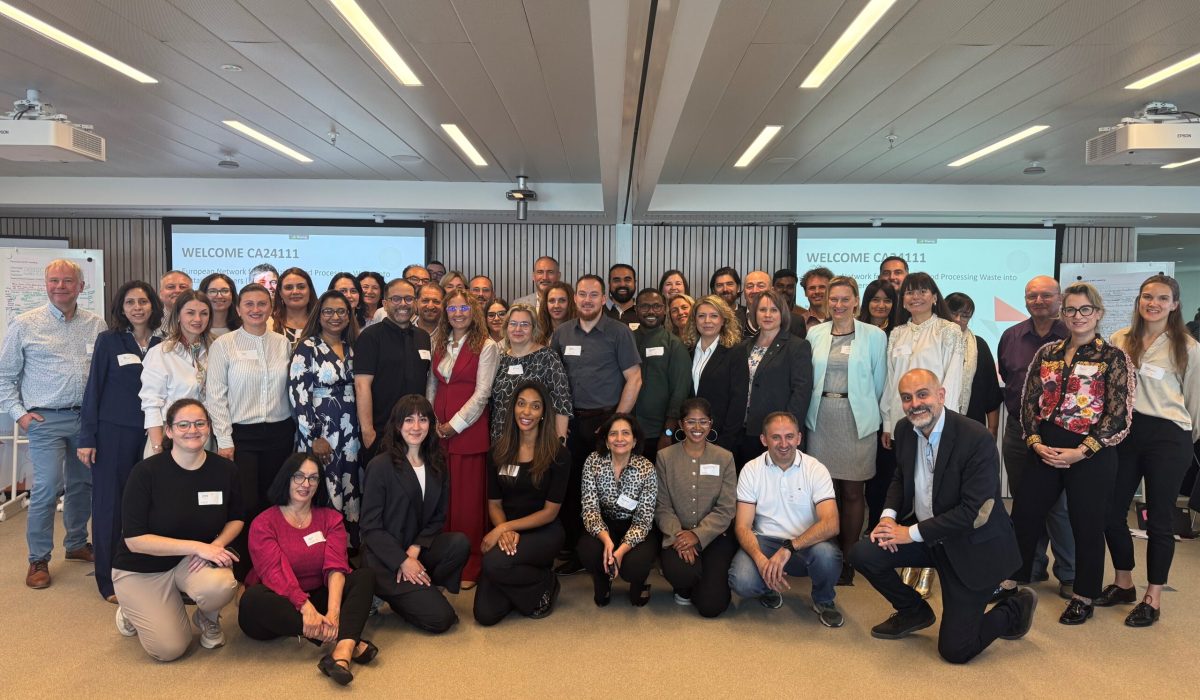
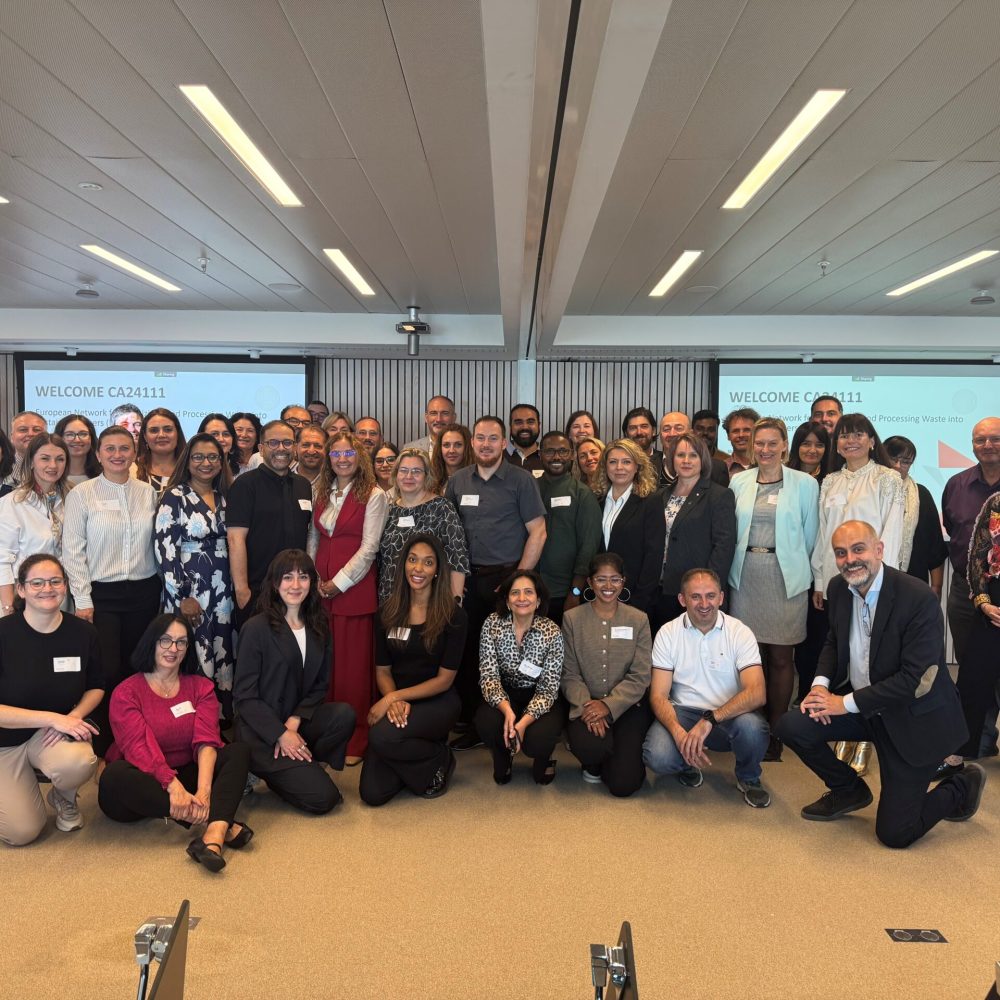
Launched on 23 September in Brussels, ENFiber aims to transform food processing waste into sustainable fibres, with our colleague Dr. Gary Chinga Carrasco representing RISE PFI in the Management Committee.
Embracing the circular bioeconomy together means joining forces, sharing knowledge, and creating innovative solutions that maximise the value of resources. This is the objective that guides the work within the REDYSIGN Project, and it is also why it’s a pleasure to highlight the participation of our colleague Dr. Gary Chinga Carrasco (RISE PFI) in the Management Committee of the newly launched ENFiber COST Action – European Network for Valorizing Food Processing Waste into Sustainable Fibers.
The Action was officially launched on 23 September in Brussels, gathering experts and stakeholders to address one of today’s most pressing challenges: the management of food processing waste. “This initiative is especially compelling because it enables close collaboration with leading European experts to develop sustainable, high‑efficiency extraction methods for valorizing food processing waste, turning it into useful fibers and bioactive compounds in line with circular bioeconomy goals”, says Dr. Gary Chinga Carrasco.
ENFiber: Transforming waste into value
The ENFiber COST Action addresses the challenge of food processing waste by transforming it into high-value fibres through innovative and sustainable methods. Food by-products are often discarded or underutilised: ENFiber aims to unlock their potential by promoting scalable green extraction technologies and applying advanced characterisation techniques. This initiative directly responds to the growing environmental and societal demand for waste reduction and circular bioeconomy solutions.
Running until 22 September 2029, the initiative is structured into 7 Working Groups covering extraction, characterization, product development, sustainability, and dissemination. As a member of the Management Committee, Dr. Gary Chinga Carrasco will among other responsibilities contribute to shaping the scientific strategy, defining the objectives, and guiding the overall direction of the Action, as well as monitoring and promoting the Action and its activities.
Across this framework, the central challenge of this initiative lies in scaling fibre production from food processing waste while ensuring both commercial viability and environmental sustainability. To achieve this, ENFiber will:
- Identify fibre-rich waste streams.
- Explore non-destructive analytical methods.
- Develop extraction methodologies to maximise yields.
- Assess the environmental impact of processes.
- Pursue product development opportunities aligned with regulatory and market needs.
By fostering collaboration across academia, industry, and policy, the initiative ensures alignment with European regulatory frameworks while accelerating the transition to market-ready, sustainable fibre-based products.
Contribution to European and global goals
Aligned with the objectives of the EU Green Deal and the circular economy strategy, ENFiber aims to promote sustainable waste management, reduce greenhouse gas emissions, and create value-added products for sectors including food, pharmaceuticals and packaging. Its outcomes are expected to include new fibre-based products, innovative market-ready technologies, and regulatory recommendations that support the development of sustainable food systems and reduce the environmental impact of waste.
In parallel, the REDYSIGN Project shares this vision by developing smart fibre-based packaging that is recyclable-by-design for fresh meat distribution. Both initiatives complement each other in their mission to foster innovation, circularity, and bio-based solutions that contribute to more sustainable European and global value chains. Together, we are building a stronger European network committed to the circular economy and bio-based innovation.