Sustainable fibre applications take centre stage: REDYSIGN at 1st ENFiber International Conference
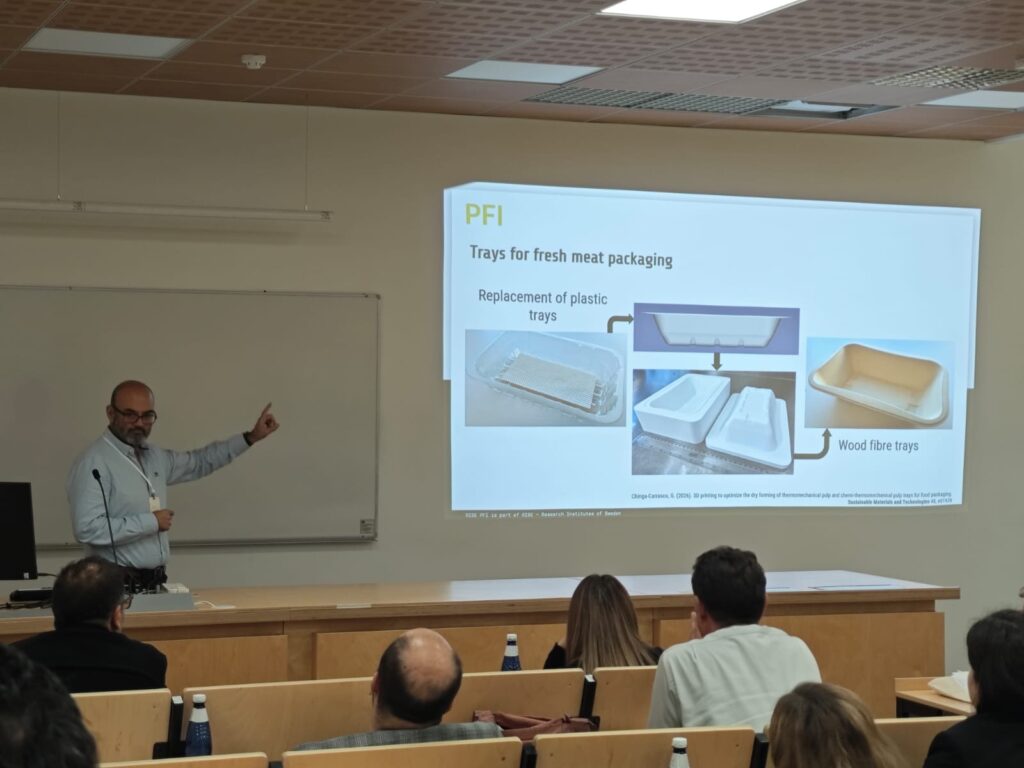
Dr. Gary Chinga Carrasco (RISE PFI) showcased REDYSIGN results on lignocellulosic fibres and thermoformed packaging applications Advances in fibre extraction and valorisation were at the forefront of the 1st ENFiber International Conference, which gathered experts to address the transformation of food and agro-processing waste into high-value materials. The event took place in Tartu, Estonia, from […]
Research publication within REDYSIGN explores enzymatic innovation to enhance water resistance in fibre-based packaging
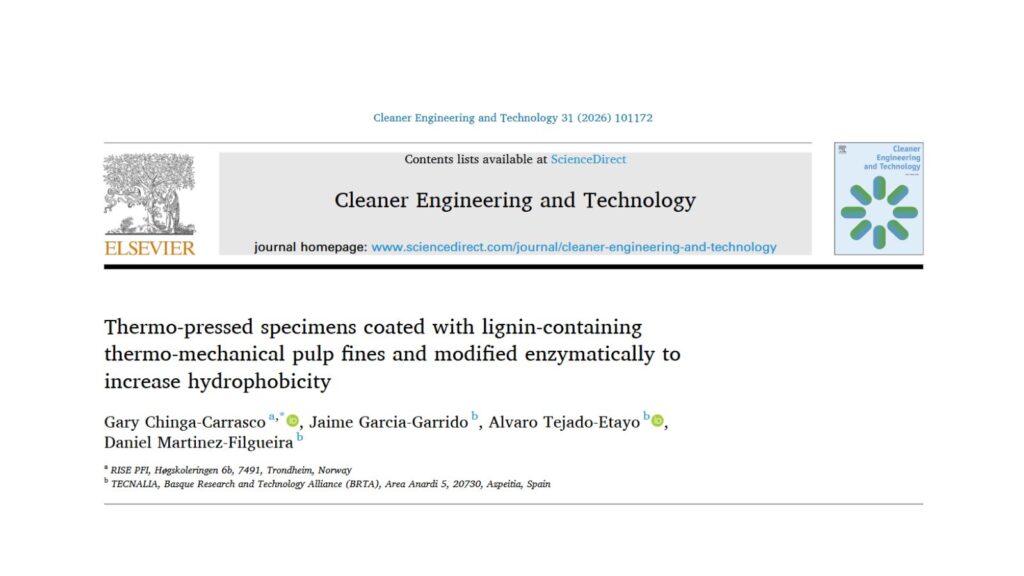
REDYSIGN continues to strengthen its scientific foundations with the publication of a new peer-reviewed article in the journal Cleaner Engineering and Technology. A new scientific publication developed within the REDYSIGN project investigates innovative enzymatic approaches to enhance moisture resistance in fibre-based materials, an important step towards advancing recyclable-by-design packaging solutions. The article, entitled “Thermo-pressed specimens […]
RISE PFI joins the Management Committee of the new ENFiber COST Action
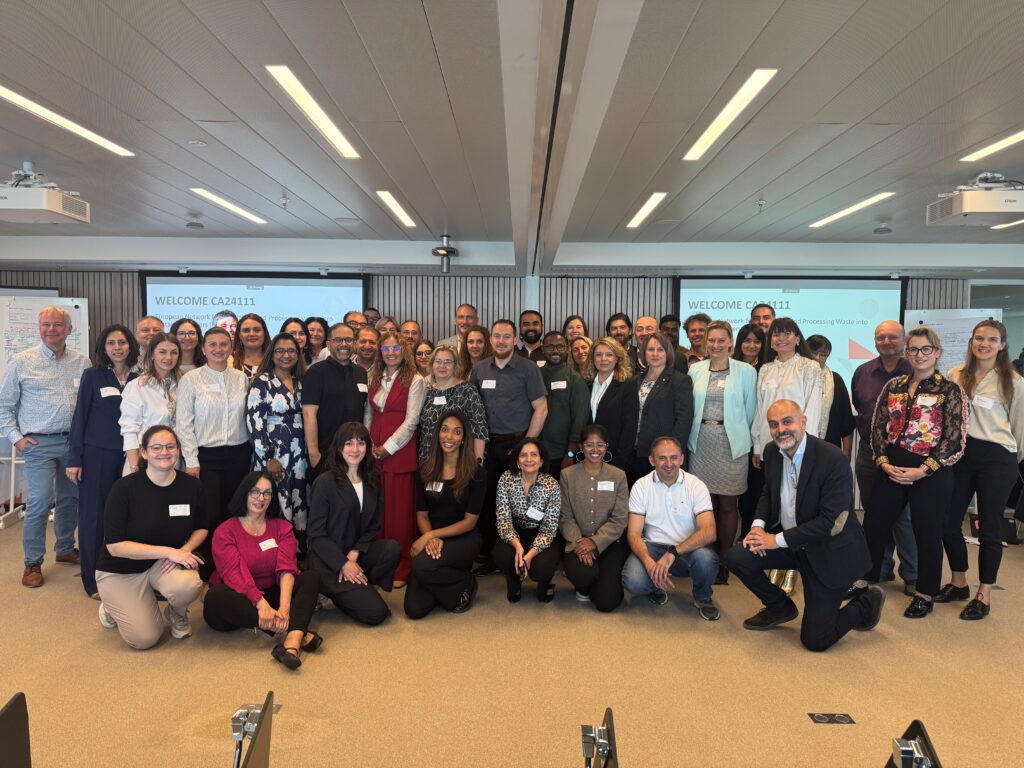
Launched on 23 September in Brussels, ENFiber aims to transform food processing waste into sustainable fibres, with our colleague Dr. Gary Chinga Carrasco representing RISE PFI in the Management Committee. Embracing the circular bioeconomy together means joining forces, sharing knowledge, and creating innovative solutions that maximise the value of resources. This is the objective that guides […]
Dry Forming: An eco-friendly approach to fibre products

The interest in lignocellulosic fibres is steadily increasing, as they represent a widely available resource and a main component of renewable, biodegradable and recyclable thermoformed products. Lignocellulosic fibres are most promising to replace single-use plastic products, as part of a developing bio- and circular economy. Various types of lignocellulosic fibres have been utilized from e.g. […]