The project has achieved important advances in the development of recyclable-by-design trays and absorbent pads, as well as in the design of anti-spoilage sensors and demonstration of their effectiveness.
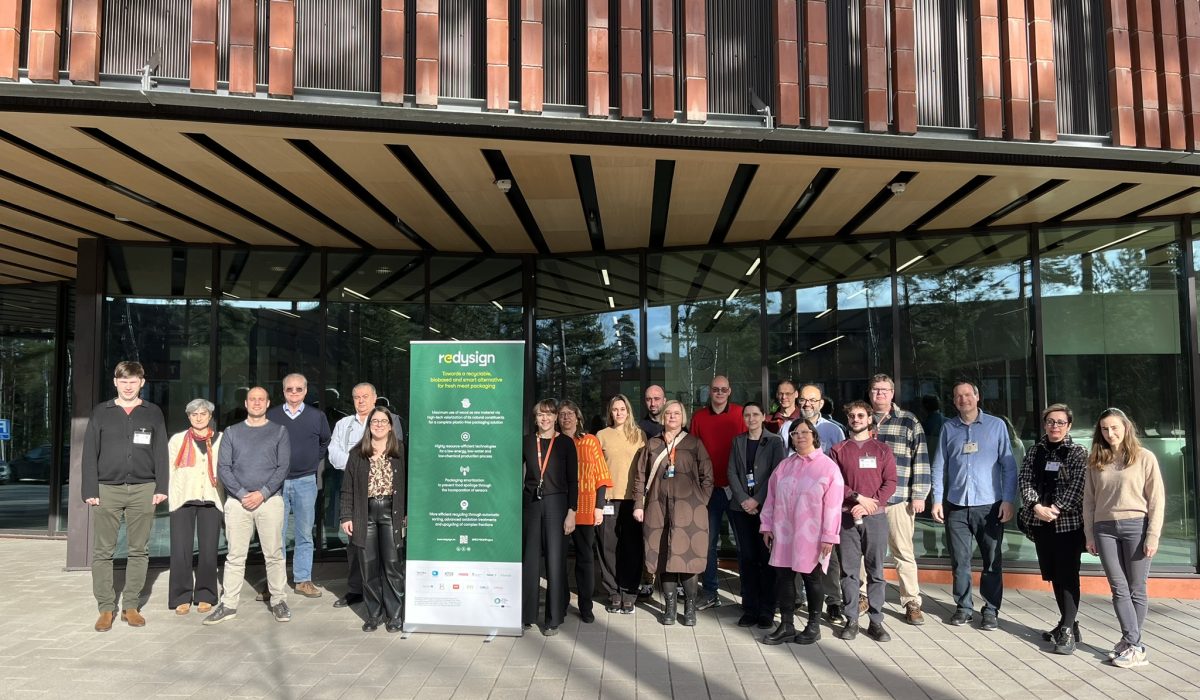
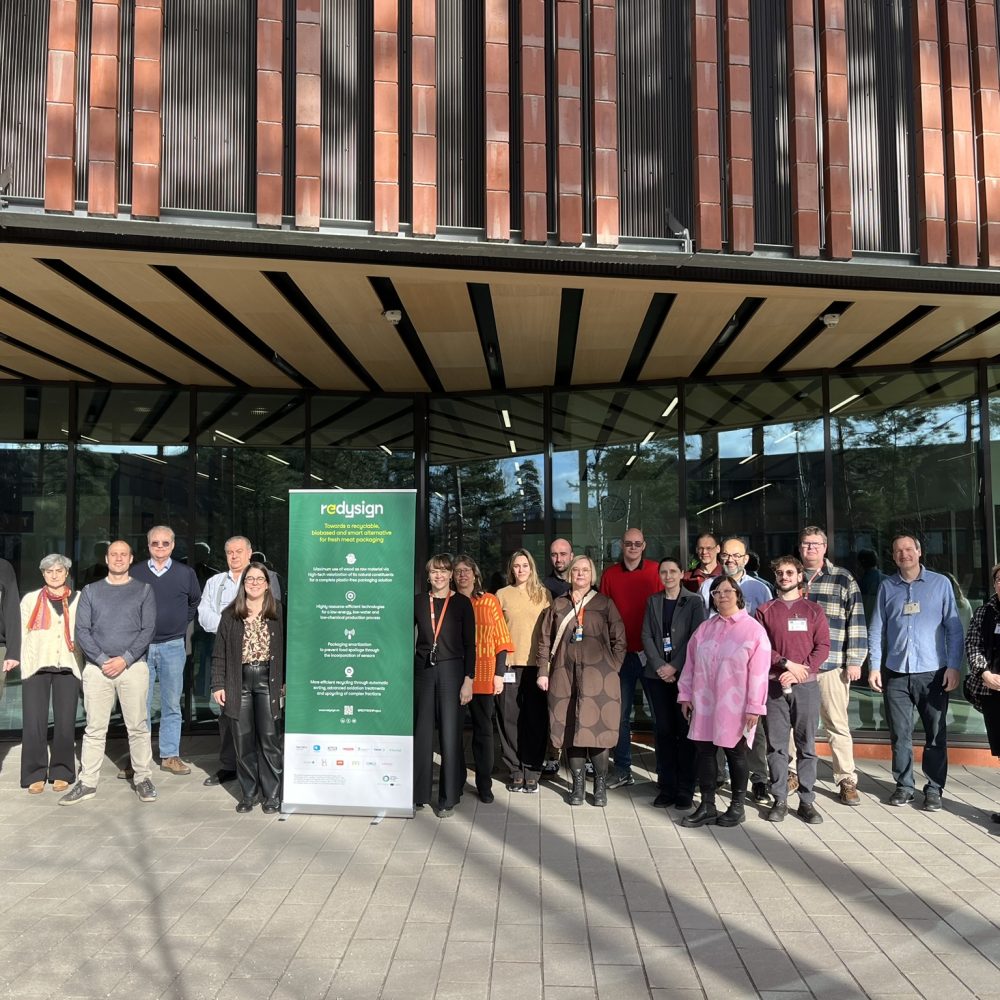
The city of Espoo (Finland) was the meeting point for the REDYSIGN Consortium on March 18th and 19th, hosted by VTT and Valmet partners. This gathering marked a significant step to review the progress made since the beginning of the project, address current challenges, and prepare for the upcoming review meeting, where REDYSIGN’s innovations and advancements will be showcased, setting the path for the second phase of the project.
Advances in research and development
Aligned with REDYSIGN’s mission to develop resource-efficient processes for producing and circularizing bio-based, recyclable, and smart fiber-based packaging, consortium partners have achieved remarkable advancements at this stage of the project.
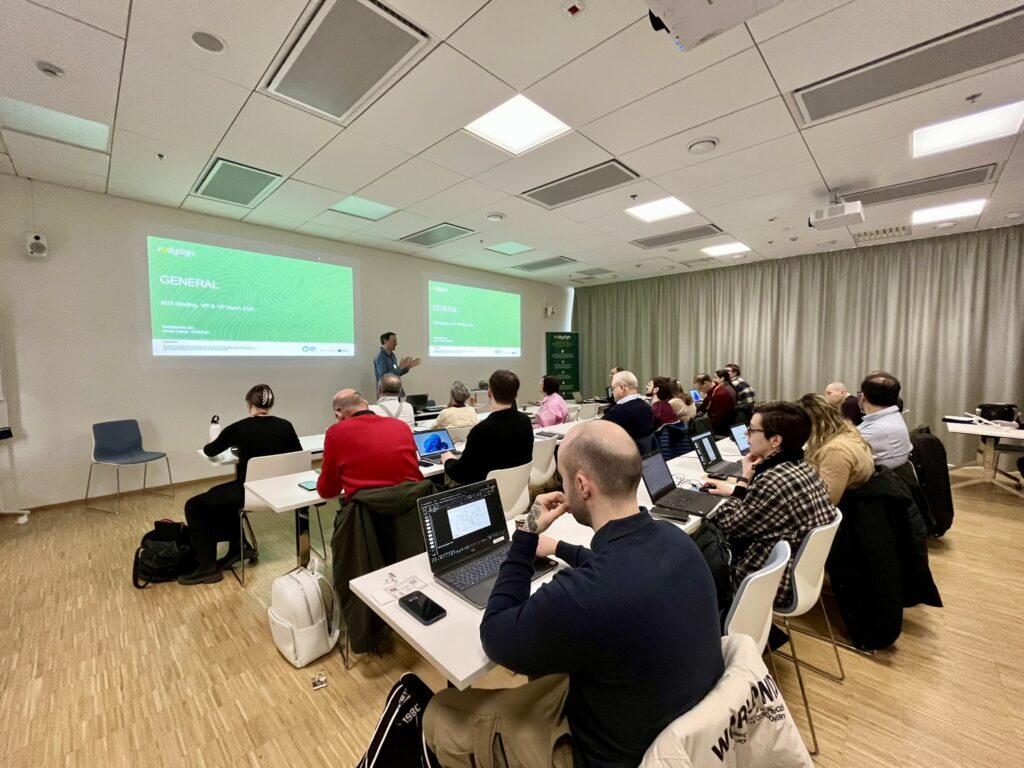
During the meeting, partners provided updates on their tasks. RISE PFI has conducted testing on various wood fibres for application in absorbent pads for food packaging. These pads, as well as other developed by TECNALIA based on their own technology also made entirely of wood fibres, have proven to be highly effective in liquid absorption, making them suitable for fresh meat packaging. These developments align with the continuous efforts of REDYSIGN partner McAirlaid’s in developing fully sustainable absorbent pads for various applications. Additionally, new films made of fibrillated wood fibres are being developed to replace the conventional polyethylene films used to cover the absorbent pad core.
Another major highlight is the improvement in packaging traceability. In relation to the development of spoilage and cold-chain sensors for enhanced performance, two different spoilage sensors were successfully demonstrated for rabbit and chicken meat. These sensors, developed by VTT, were tested in real food packaging over two weeks by EROSKI, confirming their effectiveness. Moreover, in the field of traceability, integrated RAMAN, NIR and RGB sensors were used by TECNALIA to identify potential contaminants such as blood and fat in the packaging products left by the fresh meat. Furthermore, new RAMAN markers have been developed by FNMT and effectively incorporated into thermoformed trays by PACKBENEFIT. The RAMAN sensor was then able to identify it, in both static and dynamic conditions, allowing a more efficient sorting and, thus. recycling of this type new type of fibre based packaging.
On the environmental assessment front, HOLOSS has made significant progress in evaluating REDYSIGN innovations. Over the past months, the initial steps of the Life Cycle Assessment have been advanced, focusing on collecting preliminary mass and energy data for ongoing processes. The primary emphasis has been on conducting a qualitative and semi-quantitative environmental hotspot analysis, which has facilitated the prioritization of improvement areas. These efforts are laying the foundation for more sustainable product and process development as the project moves forward.
Finally, the economic assessment of the project innovations has started with the identification of key economic hotspots in the packaging industry, considering the entire value chain. The initial mapping of the most benefited and impacted stakeholders marks the beginning of the social life cycle assessment. This groundwork will be crucial for establishing a firm basis for the socio-economic evaluation of REDYSIGN products.
Technical meeting and pilot plant tour
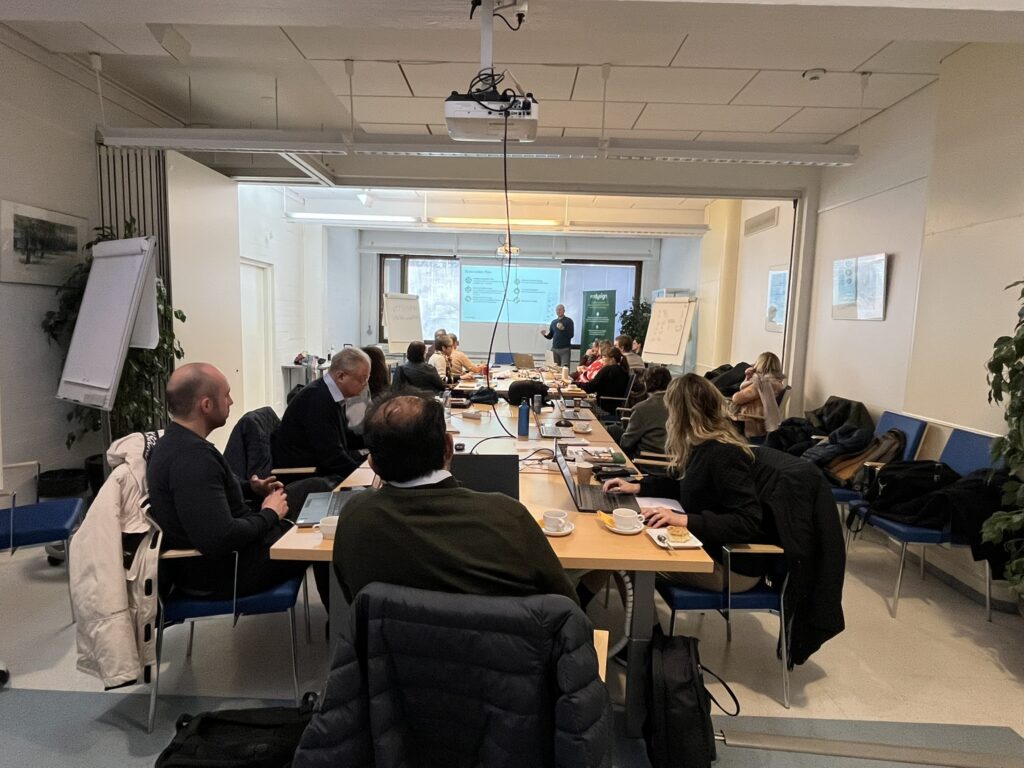
The two-day meeting was held in a hybrid format, combining in-person and online participation to gather insights from all consortium members. These sessions were filled with collaboration, insightful discussions, and strategic planning for the road ahead.
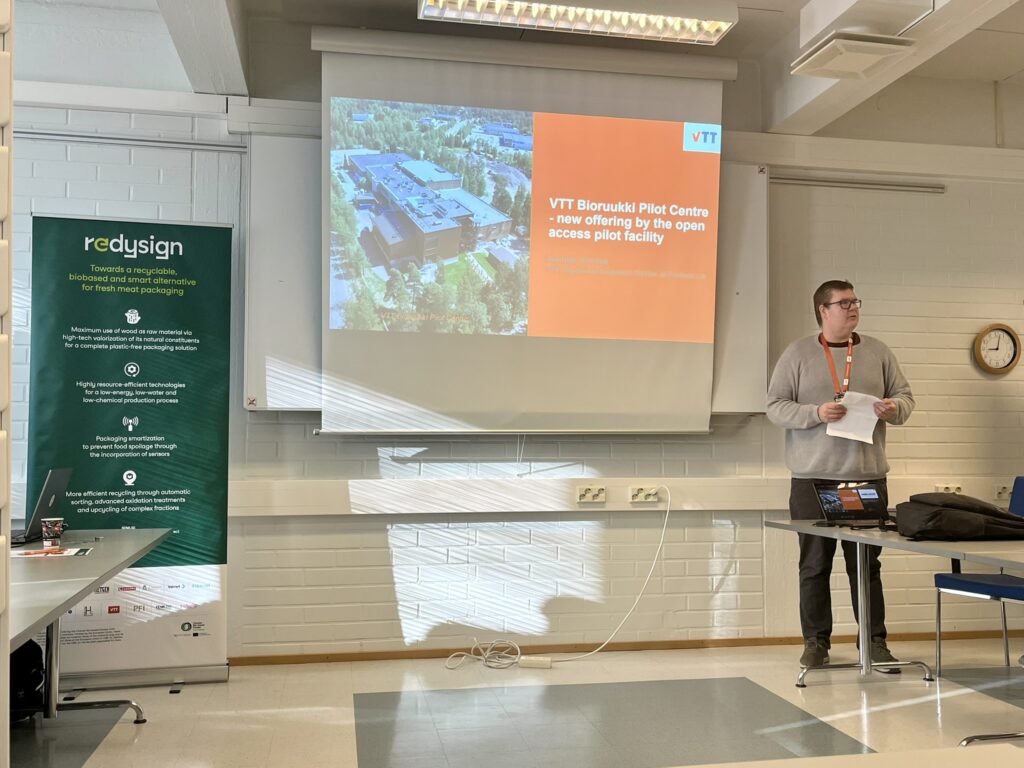
As a key activity of the gathering, partners had the opportunity to participate in pilot tours at the VTT Bioruukki Pilot Centre (Espoo), which serves as an integrated enabler to accelerate high-value business development in the bio and circular economy. Additionally, the hosting partners provided insights into VTT’s pilot plants, which cover the entire value chain in bio and circular economy processes. These include industrial biotechnology, process chemistry, bio-based materials, biomass deconstruction and fractionation, and thermochemical conversions.
Looking ahead, promising results will continue to emerge, setting a strong foundation to reach the halfway point of the project and achieve the proposed objectives. REDYSIGN remains at the forefront of research and innovation in developing sustainable packaging solutions for the future.