

The food industry faces the challenge of developing eco-friendly, cost-effective, and sustainable packaging. Petroleum-based materials used in traditional packaging cause environmental pollution, resource depletion, and generation of single-use waste. The industry is shifting towards biodegradable packaging made from renewable biomass resources and non-harmful chemicals to reduce environmental impact and health risks.
The urgency in the transition towards safer and more sustainable chemicals, materials, production processes, and products is a key aspect of the EU Chemicals Strategy for Sustainability (EU-CSS). This transition also contributes to the Sustainable Development Goals (SDGs) by working towards zero pollution and a non-toxic environment ambitions. The Safe and Sustainable by Design (SSbD) framework is a key element of the EU-CSS, which aims to reduce chemical pollution, protect ecosystems, promote the use of resources responsibly, and prevent human health problems.
The SSbD framework in REDYSIGN: A step beyond current solutions
Food packaging can be significantly enhanced through the incorporation of Safe and Sustainable by Design principles. The SSbD criteria strive to craft each packaging component with the utmost consideration for environmental and human health, thereby establishing new benchmarks for sustainability and safety in the packaging industry.
To support the advancement of REDYSIGN‘s innovative packaging solutions, HOLOSS has strategically integrated the SSbD framework during the early stages of product development. By minimising the use of harmful chemicals and adopting design strategies that ensure clean material cycles and reduce greenhouse gas emissions (GHG), the potential risks associated with the products’ development can be mitigated. This approach ultimately minimises adverse impacts on both human health and the environment, contributing to the creation of a safer, more sustainable circular economy.
HOLOSS is a significant player in developing advanced SSbD methodologies and guidelines, particularly in the plastic sector. One of their notable projects, in addition to REDYSIGN, is the ANALYST project, which aims to create robust and consistent methodologies for integrative health, environment, social, and economic impact assessments of plastic materials. HOLOSS works is crucial in advancing the SSbD framework, which is essential for creating cleaner, climate-neutral value chains.
LCA: The strategic tool driving sustainable food packaging
A comprehensive approach based on Life Cycle Assessment (LCA) is crucial to advancing the sustainability of innovative packaging solutions. Standardised according to ISO 14040/44, LCA serves as a crucial and robust sustainability tool that systematically evaluates the environmental impacts of a product or service throughout its entire life cycle, from raw material extraction to end-of-life disposal. This methodology assesses key environmental aspects and impacts, enabling the identification of critical areas for improvement in design, manufacturing, and end-of-life management.
LCA enhances the circularity of REDYSIGN innovations by providing detailed insights into the environmental impacts of products at every stage of their life cycle. By highlighting potential areas for optimisation, LCA ensures the maximisation of resource efficiency and the reduction of waste, thereby promoting more sustainable and circular packaging solutions.
The triple bottom line model of sustainability
In the REDYSIGN project, HOLOSS assesses the sustainability of REDYSIGN products by applying the “triple bottom line” model of sustainability (the three pillars). This approach ensures that the environmental, economic, and social dimensions are integrated into a comprehensive and holistic sustainability evaluation.
- The economic sustainability of the products is assessed through LCC, ensuring that REDYSIGN products are economically viable while maintaining long-term profitability and managing environmental and economic trade-offs.
- The social and sociological aspects of the innovations are evaluated through s-LCA, allowing HOLOSS to understand the product’s impact on society, including effects on communities, labour conditions, gender equality, and individual well-being. This dimension is crucial for ensuring that the products contribute to social equity and human rights.
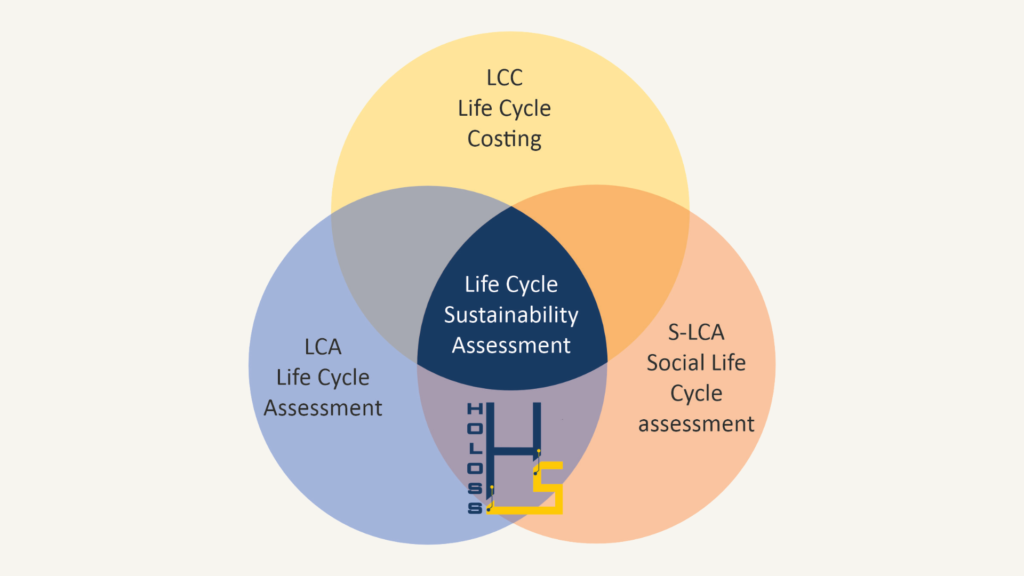
By addressing the full scope of sustainability, this approach will foster better REDYSIGN outcomes, effectively meeting both current needs and the expectations of future generations.
Article prepared in collaboration with the HOLOSS Team: António Nogueira and Tamilazhaki Lingasamy and Ana Lago.