

The interest in lignocellulosic fibres is steadily increasing, as they represent a widely available resource and a main component of renewable, biodegradable and recyclable thermoformed products.
Lignocellulosic fibres are most promising to replace single-use plastic products, as part of a developing bio- and circular economy. Various types of lignocellulosic fibres have been utilized from e.g. wood and annual plants. Wood pulp fibres are especially interesting as they are produced at large volumes following well-established and sustainable industrial processes.
Detailed characterization of pulp fibres and products
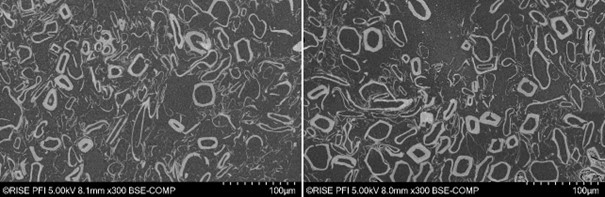
It is essential that wood pulp fibres are extensively characterized for use in thermoformed food packaging. This provides valuable insights into the suitability for a specific application. Here, the extensive expertise at RISE PFI regarding chemical, physical and structural characterisation of pulp fibres and micro-/nanofibrillated cellulose is applied, including recyclability and biodegradability testing. Among wood pulp fibres, thermomechanical pulp (TMP) and chemi-thermomechanical pulp (CTMP) are interesting due to their high production yield (more than 90%) and lower prices, compared to chemical pulps.
Dry-forming: Benefits in sustainability and process efficiency
Wood pulp fibres have been utilized to manufacture e.g., trays for food packaging, liquid containers, caps etc. Such products have been rapidly developed based on two main technologies, i.e., wet- and dry-forming. Wet-moulding has been the most utilized technology for production of trays. In wet-moulding, fibres are dispersed in water at low concentration, the fibre suspension is sucked into a mould, compressed with high pressure and temperature, and dried to consolidate a given three-dimensional product. Usual cycle times can be >20 seconds.
Recently, dry-forming has gained interest due to the potential benefits of being more environmentally friendly due to lack of water during forming. This reduces processing time and energy consumption. Dry-forming is reported to require shorter cycle times (<10 seconds).
The main limitation with dry-forming is the depth of the target product. Therefore, in the REDYSIGN project, RISE PFI focused its efforts on designing and developing an improved forming step to facilitate the dry-forming of geometries that are higher than 40 mm, with steep walls and without wall failure. This has been achieved based on the extensive experience at the institute on digital designing and modelling, 3D printing to preliminary test concepts and an effective set-up to develop moulds for dry forming.
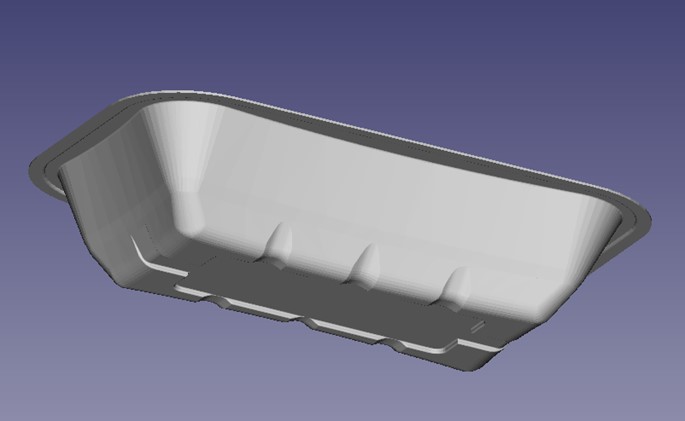
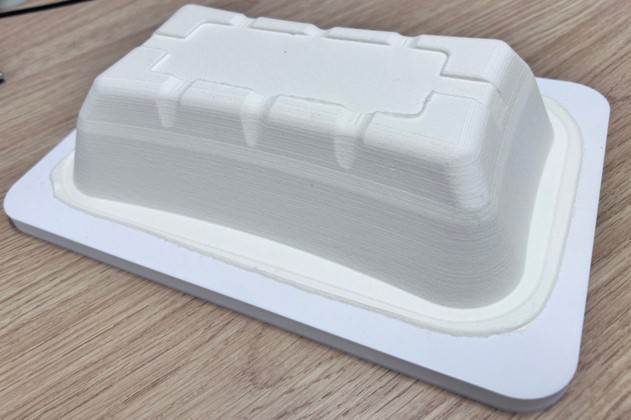
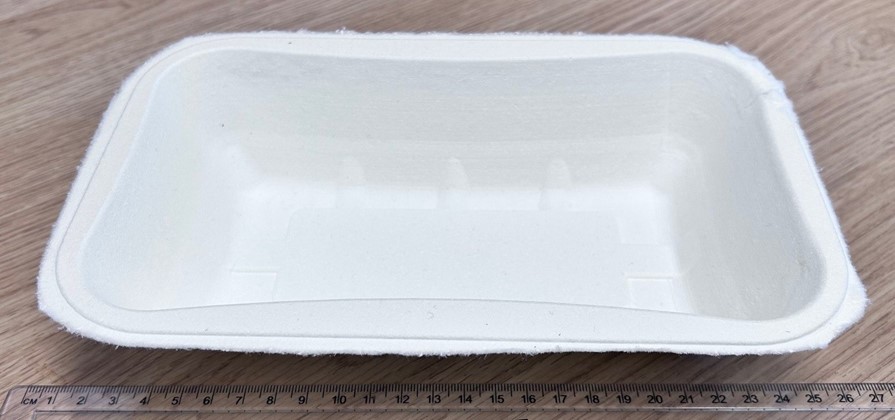
Importantly, the development of our wood pulp fibre tray solutions for fresh meat are guided by Safe and Sustainability by Design (#SSbD) strategies. These principles are essential for assessing the potential environmental impacts of the products being developed.
Hydrophobized dry-formed demonstrators
In collaboration with our partners in REDYSIGN, RISE PFI is advancing on the hydrophobization of trays, applying biotechnological approaches and utilizing the same natural components found in thermomechanical pulps, including lignin as the basis to increase hydrophobicity and micro-/nanofibrillated materials to provide strength.
“I am pleased that we are currently able to produce tailor-made dry formed demonstrators with increased moisture resistance, recyclability and natural, eco-friendly appearance of wood fibres, to align with the aesthetic of a sustainable product”.
Article in collaboration with Gary Chinga Carrasco, lead scientist in the Biopolymers and Biocomposites area at RISE PFI.